Archive for the ‘Empathy’ Category

A life of generosity lived with an open heart. I will miss you, Ken Myszkewicz.

October 31, 2016

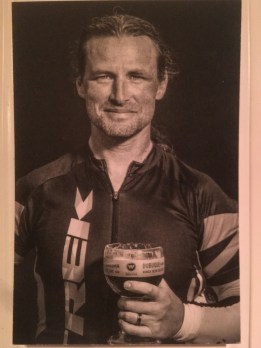
A friend of mine was murdered six days ago. He was 43 years old and left behind a wonderful wife and son. And amidst the heartbreak and the tears, my friend left life as he lived it – focusing all of us who knew him on the capacity each of us has to make life better.
ken-myscewic

We first came to live in our town in 2001 – my wife’s grandmother was nearly 90 years old, and we decided to move close to her so if she passed away we wouldn’t wish we had been with her – we would have actually been with her. This was prescient, as she did pass away six months after our fateful decision to be with her.
I’ve always been a big fan of cycling, and I brought my bike with me when we moved – an “exotic” Pinarello I bought with part of my signing bonus when I got out of business school in 1990. One of the first things I did once we got settled in our new home was to go out for a bike ride – Southeastern Wisconsin is an awesome place to ride a bike – miles and miles of country roads and beautiful scenic farmland.

So there I was, I’d just finished one of my first rides and I went to a convenience store in town to get something to drink. I was sitting on my bike and noticed a guy across the street walking by, see me, do a double-take, and then make a beeline for me. He introduced himself, and then proceeded to ask about the bike and offered a load of suggestions about routes as well as let me know there were Tuesday/Thursday “no drop” rides leaving from the Trek factory in town. Before I knew it we’d exchanged contact info. My wife remembers me coming back from that chance meeting excited to have had such a warm welcome to the cycling community.

That guy was Ken Myszkewicz.

Those “no drop” rides in hindsight are where Ken’s character were revealed, time and again. I’m a bike nut, but I’m not a cycling athlete. I love riding bikes, and I did show up on more than a few of these rides. The group would head out for two hours of riding, and the pace would pick up along the way. I would generally be at the back of the group, my eyes focused on the hub of the rider in front of me. As the pace increased and as I got tired, tunnel vision would develop, and about all I could see was that hub.

Cycling is a surprisingly mental sport. When you’re tired, and all you can see is that hub, staying “on the wheel” of that person in front of you becomes your mental obsession. It’s your lifeline to the group. Fall back too far and you won’t be able to speed up enough to get back on the wheel, and you’ll be riding by yourself.

There’s even a term for this – “yo-yo-ing” off the back of the pack. Fall behind, work your way back up. Fall behind again, work your way back up again.

And “no drop” rides are where the pack keeps its speed to the point where no one falls off the back. It’s humane to the less capable, justifiably annoying to the better cyclists.

On my first group ride there I was, 20 miles in, and at the back. Yo-yo-ing. And as hard as I tried, I was starting to fall back. With my tunnel vision I didn’t notice a rider look back, and then slow down and move up behind me. Moments later I felt a firm hand on my lower back, and it pushed me forward. Right up behind the wheel of the rider at the back.

That was Ken. No words. Just help. And while he had a legendary reputation for being able to set a pace for a ride that would leave the entire group scattered and exhausted, he chose to take his abilities, and his heart, and direct it to helping others stay in the group. It was a choice.

Ken was a legendarily competitive cyclist, who founded more than a few cycling teams and who raced and won just about every kind of cycling race that exists: road, cyclocross, endurance, mountain biking. He worked at Trek – how much better does a job get if you’re a cyclist?

When he found out I was nuts about cycling and that Greg Lemond is a hero of mine, Ken made sure to get Greg to sign a photo when he stopped by the Trek factory.

At the service I met people he made better by helping them keep up. The people he made better by setting a pace on competitive rides that caused them to dig deeper for strength and mental toughness than they could have on their own. He made people better by simply showing up, at races, at rides, at school events. When I spoke with others who knew Ken this generosity of spirit is what each and every person I spoke with remarked on.

Ken was both a man of few words, and amazingly skilled at conversation. He could remain silent in a group, and offer one-word answers and what one might describe as even grunts if he thought the subject was mundane or frivolous. Yet he could also engage you in a conversation for hours if the topic was worthy and you were game.

When we first moved to our town, for about five years we would host a holiday party. At the first year the party ended at about 9, and everyone left, except Ken. He grabbed a beer and continued talking for the next two hours. It was a good, thoughtful conversation. If it had been anyone else we would have thought “why won’t this guy leave” – but this is where Ken was at his best. We took it as a compliment, that this was Ken’s way of letting us know he was comfortable and felt welcome. With the crowd gone, it was just him and you. For the next few years we would plan these parties knowing there would be the time we told guests the party would end, and then there would be the time when Ken would leave. We’d plan for at least an hour. This paid dividends. We got to know Ken’s wife, Kim really well, and this cemented the friendship our children had with their son, Tyler.
ken-and-family

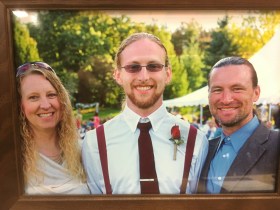
Of the hundreds of photos we saw yesterday, every single one had Ken, his wife Kim, and their son Tyley with big, beaming smiles. Every one.

These weren’t forced. They were genuine reflections of the hearts that produced them.

The searing loss for me is that it’s precisely too late to let Ken know how much I valued who he was. And yesterday at the service I saw hundreds of people who Ken had made a difference in their lives, and they couldn’t let Ken know either. Because making a difference in someone’s life most often is done in a way that neither party notices at the time. Ken changed lives because of who he was on a daily basis and he never helped people to be noticed. There were no heroics involved.

And my life was changed by Ken in ways I only see and appreciate through the pain of his loss and a broken heart.

At Ken’s service yesterday the most telling, awe inspiring moment happened when another cyclist stood up and asked “How many of you have had Ken show up and push you back up to the group?”

And more than 100 hands went up.

Ken was an awesomely accomplished cyclist, won more than his share of races. He was a fiercely competitive person. But the difference he made with his life was not what he won, but the choices he made to help. 1000s of times. The choices he made to live his life.

The very wise and kind pastor who oversaw the service yesterday closed it reminding us that the daily generosity Ken practiced is what we should focus on in our own lives. How we can  do more, every day.

For me, I will look more generously to find those who are”yo-yo-ing” in life and be that person who shows up with a firm hand, to help push them forward.

Ken is gone now. But he left us all an example about how to live a life.

I’m done with Uber – The moral cost is too high

November 29, 2014

I was one one of Uber’s best fans – I must have recruited a dozen friends and colleagues to the service, because it fundamentally is just so much better than taxis or car services. Wonderfully inspired idea, and at the street level, brilliantly executed. I loved it.

And I use the past tense because I did love it. But not anymore. The trickle of moral lapses by Uber’s CEO, Travis Kalanick, have become a roaring torrent. Uber has an ethics problem, but most importantly it has an ethical leadership problem.

Peter Thiel summed it up succinctly: “Uber is the most ethically challenged company in Silicon Valley.”

Which is why the details of the plan to smear journalists who create unflattering views of the service pushed me to the point of being all done with the service.  So, on November 25 I sent my request to Uber to cancel my account, as “the moral cost to me of doing business with your firm is more than I can afford, and I have happily created my first accounts at Lyft and Curb.”

And in efficient Uber fashion, I received this confirmation of my account cancellation, which is sad. The service and drivers are great. But that’s not enough today. You have to believe in and trust the people at the top. And I can do neither with Uber the way it is being run right now. Travis – until you show some leadership and I won’t be back.Uber Cancellation

Personal Heroes

October 21, 2013

I have personal heroes – folks who have lived their lives in ways that give me inspiration and a vocabulary to name my own ambitions. People who are unafraid to say what they believe, regardless of what it will cost them.

David Walsh is one of my personal heroes

Few people outside of professional cycling know who this man is, but he’s the journalist who first suspected Lance Armstrong of cheating, and spent 13 years doing the difficult work of uncovering the evidence and speaking the truth. And he became the target of all Armstrong could throw at him.

This Sunday Times article says it all:

When Lance Armstrong won his first Tour de France in 1999, David Walsh wrote in The Sunday Times that he watched the race in sadness. Armstrong’s astonishing exploits, just three years after his successful battle with cancer, did not make sense to him. Rather than joining the unquestioning journalists who lauded the American’s achievements, Walsh called for an inquiry into the Tour de France in July 1999,….”

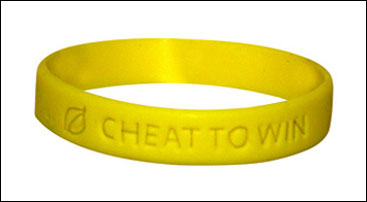
CTWThink about the context. In 1999 – the first year of Armstrong’s comeback – Walsh calls this out. And for the next 13 years  pretty much everyone else tells him he’s wrong. It costs him his job, professional and personal relationships. How lonely it must have been for him.

I’m not going to re-hash the whole Armstrong crime, but if you want to dig in, look here, and here, and here for a start. David’s books are “Seven Deadly Sins” and “From Lance to Landis”.

I am a huge cycling fan, and my family and I spent five  vacations in the French Alps to watch the race in person. In 2006 through a journalist friend, we struck up a dialogue with David to encourage him to write what became “From Lance to Landis” – his first english language book that laid out the evidence Armstrong was cheating.

David flew to France and spent the weekend with us. I was awestruck at the simplicity of his motivation: to expose a lie. It wasn’t personal, it was about values. This was a man of principle outraged at the crime he clearly saw but was incredibly inconvenient and unpopular to expose.

Over dinner long into the night, and then again at breakfast the next morning, the talk centered on the crime that was happening in plain sight. Incredibly we were sitting with him at that dinner when his phone rang – another journalist  calling him with the news that Floyd Landis had tested positive at the just completed Tour de France. Talk about being at ground-zero at a pivotal moment.

Looking back I can’t believe that weekend actually happened. What brought us together? I would like to think a sense of shared values.

This is a man whose humility, values, and sense of purpose we can all learn from. A true hero. I’ve got a few other people who serve this kind of inspiration, I’ll write about them later. For now, thank you, David.

The Brand Value of “No”

March 5, 2012

One of the most valuable lessons I learned as a venture capitalist, and one that my partners and I took super seriously, was how our personal brands and firm’s brand would be built on how we said “no.”

Being in the VC business is being in the business of saying “no.”  We looked at 300-400 deals a year and funded two or three. Every week I had to say “no” to lots and lots of people. Heck, Marc Andreessen said “no” 1,500 times last year at his firm.

It’s hard to tell someone you’re not going to provide the funding to get their company started when the person you’re speaking with likely has put months or years of their lives into the business they’re pitching to you. The easy way out is to avoid it. And a lot of the time that’s what happens.

A surprising minority of VCs just won’t ever get back to the entrepreneur. Others will send a short, frequently cryptic “your business does not fit with our criteria” response. Neither of these is helpful or particularly honest because VCs pass on deals for very specific reasons that they discuss with their partners in Monday meetings.

So my partners and I decided when we said “no” we would do so in a way that passed along the reasons why – that way the entrepreneur would be able to make some use of our collective thinking. If I felt the business model was flawed, the team was weak, or product strategy too broad – then sharing that information might help the entrepreneur make adjustments. But at least I would be straight-up.

Many of these businesses were fundable – just not by us (that’s where the “did not fit our criteria” was true), so I strove to pass along information that might help the entrepreneur have a better shot at the next firm they pitched.

Not only is it hard to be this direct with someone, it also takes a lot more time than going silent or sending a curt generic note. The nature of leading a startup means being tenacious and persistent. So frequently I’d spend an hour or more while the CEO would try and talk me out of my decision, rebut my argument, and bring more data to the discussion.

This is super relevant regardless of what business you’re in. You will say “no” far more often than you will say “yes”, and becoming comfortable and constructively effective at saying “no” is a way for you to build value in your personal brand as well as your company’s. Whether it’s turning down a proposal from a contractor or letting the many people applying for an open position know they’re not going to make the cut, you can distinguish yourself mightily in how you convey your decision.

You have the opportunity to share your personal values – your brand – to the many people you say “no” to and who knows what opportunity that might create down the road. And in an age where personal brands are becoming increasingly essential to your company and your career, learning how to effectively and constructively say “no” is critical.

So, the next time you’ve got five or ten or fifteen candidates for an open position, invest in your personal brand by telling the folks that didn’t get the job why you chose someone else. You’ll be doing each of them a favor, and building a brand for yourself that you’ll be proud to associated with.

A spontaneous reaction

September 23, 2009

I’m still struggling to get back into a writing routine after my John Muir Trail adventure, there’s a lot going on in my life and job, and I’m still a bit consumed with the deeper, reflective topics I’d spent all those miles contemplating on my trip. 

And then, without a lot of forethought or anticipation, a topic (re)surfaced.

Towards the end of the last school year, there was an incident of racism at my daughter’s high school, which revealed the complexity and range of our community’s response.  I wrote about this at the time it happened, how in general many opportunities were missed to both care for those involved, as well as make the most of learning from it. 

And not one to lob criticism from the sidelines, I agreed to join a taskforce setup to better understand our community’s ability to foster diversity, and what we all can do differently to ensure racism or any other form of discrimination has a short life, if any, here.  We had a meeting on September 9, and while there is still more motion than progress, the trend-line is a good one, and we’re converging on a set of recommendations that are actionable and durable.

A lot of what we’ve discussed is how to show people that in the moment there are choices, and how to choose to speak out, to stand up. 

So when I came across an article in the Seattle Times last Thursday morning about a 70 year-old Armenian man, Henry Gasparian, it found my mind prepared and inqusitive.  He was arrested for his spontaneous “personal and emotional” reaction to seeing posters of Barack Obama with a Hitler mustache.  Gasparian lived through the occupation of his country by the Nazis.

He was on his way to the Edmonds Farmers Market, and when he saw these posters, he tried to grab them out of the hands of the Lyndon Larouche supporters who were handing them out.  To make this sad, long story a bit shorter, he was charged with two counts of fourth degree assault.  You can and should read the article.

The courage of this man and the raw logic of his outrage are inspiring.  The only action remotely criminal was not the offensive poster (first amendment right) nor Gasparian’s reaction (common sense), but the need to silence him, to criminalize his behavior. 

It seems cowardly on the part of the Larouche supporters to show up with this offensive poster, taking full advantage of the protection of the constitution, and then not be willing to tolerate the (expected) reactions.  To claim Gasparian reacted “without provocation” seems absurdly ironic.

While the Larouche supporters could perhaps feel justified that Gasparian’s physical actions were threatening, I think the burden is on them to anticipate the reactions they could provoke.  If you yell “Fire” in a movie theater, you shouldn’t be able to charge the crowd that tramples you on their way out the door with assault.

So last Thursday afternoon those thoughts were in the back of my mind as I was walking down the Seattle waterfront with a friend, and ten feet in front of me was a woman holding a large poster of Barak Obama, with the Hitler mustache.  I was in mid-conversation when I looked up at her, our eyes met, and she said “What do you think?,” and without breaking stride I said “I think that poster’s offensive, and you should be ashamed of yourself.”  I said it calmly, but strongly.

The woman seemed taken aback, said nothing in response, and shifted her gaze elsewhere.  And I kept walking, tried to resume the conversation, but had to explain that my reaction was completely spontaneous. 

I am not the kind of person who gets in public confrontations, but that felt so comfortable, so right, calling this out, in the moment.  In my own little way.

So I’m with Henry Gasparian, and the value of spontaneous reactions. 

A BDP from an unlikely “industry”

July 29, 2009

My first job out of business school was with a management consulting firm who focused on growth strategies for their clients.  The four founders of the firm were former partners at Bain, and they brought to our firm the concept of “best demonstrated practices” which we referred to by the acronym “BDP.”

Bain defines a BDP as something that “generates the most value at the least cost.”  At our firm it referred to an example something done so well you could you use it as a model to learn from, where you could discern the essence of success from and apply it more broadly.  This could be a business process or a business model, communications or management style.  It’s a nice construct to help you identify patterns that could be relevant to you or your business.

Of course BDPs also have limitations.  Without the corresponding insight about the context of why an example works so well, about all you’ll be able to do is copy the motions of the example, but not the essence of its effectiveness.   To make a BDP really work you’ve got to simultaneously abstract away the context while also deeply understanding it.

I’ve seen some of the startups I’ve worked with over the years really get this wrong, whose teams will energetically seek out the best performing companies in some discipline (say, acquiring new users) and just copy what was done, without understanding whether or not those same methods really make sense or apply to their business, with their users. 

But every so often you come across an example of simplicity and insight, efficiency of communication, where the problem has been thought through so completely you just wish you could take it, copy it, and paste it into whatever business you’re running.

I came across one of these earlier in the week.  You know from my last post that I’m hiking the John Muir Trail next week, which will take about three weeks.  I won’t be able to carry all my food for that length of time and will need to resupply twice along the way.  This works pretty simply, you mail a package of supplies to one of two “resupply” points, and they hold it for you until you arrive.  You restock your backpack, give them your trash, and off you go again.

But it’s more complicated than that.  I am depending on that food being there when I get there, If it’s not there when I get there, I’m screwed – I’ll be close to being out of food and will still have more than a week of hiking to go to the next resupply.  So getting this right matters a lot.

The first resupply point is like a hotel in the mountains, about a six mile roundtrip detour from the trail.  The second resupply point, The Muir Trail Ranch, is much more convenient, literally on the trail.  The quality of thinking that went into the instructions about how to get your package to them, and how to ensure a successful resupply, is simply magnificent.  The fact that you ship your food to them in a five gallon plastic bucket makes this all the more whimsical.

It’s not just the explanation of the steps and logistics, it’s the tone of the communication.  Clear, simple, welcoming, conveying a desire to make you successful, to make the whole process successful, conveying a deep understanding of the context of their service. 

Their instructions reads like an FAQ, but it’s not a laundry list of questions, it’s a very thoughtful and insightful delineation of your needs and their ability to meet them.  They’ve addressed the “lifecycle” of a resupply – the range of needs you will have (email access, recharging devices, disposing of your trash) when you’ve come to get more food. 

To me the high point is at the bottom of the page, where they encourage you to pre-register your delivery, and will even e-mail you pre-printed shipping labels.  The example label sheet is stunning in its efficiency – I don’t know about you, but I’ve certainly never mailed a bucket before, and doing so is not obvious.

This experience certainly reduced some anxiety about my resupply, but made me appreciate how wonderful it is to be on the receiving end of high quality thinking and customer awareness.  Where insight about the context is abundant.

Societal costs and pure economics

July 2, 2009

I wrote earlier in the year about the challenges companies face raising Series B financings, and in particular how vulnerable companies are who have demonstrated potential but not yet converted that into a reliable, profitable revenue stream.

The issue is keeping an eye on your cash while continuing to develop the business, anticipating the next infusion of capital.

But what if you look at the business today and soberly assess that it’s just not going to get to where you expect or believe it needs to be: either to raise more money from an outside investor or to deliver meaningful value?

When do you make the decision to stop fundraising and use the remaining cash to wind the company down?  It’s somehow easier to get to that decision point as an investor.  You’re almost structurally set up to make that dispassionate call, not involved in the daily business, but fluent in the operations and the potential.

But that’s structure and theory.  In practice you are very close to the business and to the management team.  You’re spending tons of time with them.  You invested in their vision.  So unless the company has missed its milestones by a country mile there’s enormous room for debate, and ambiguity.

However a looming cash-out date sharpens everyone’s focus; there’s only a few short months until you’re out of money.  Time pares down the alternatives until there’s just one.

What about companies who have enough money to keep going for a year or more, but whose business is just not performing?  And what if you don’t expect it to?  What if the shape and trajectory of the business is just not mapping cleanly onto a business that will deliver the potential you expect, or more importantly, that the market will value?

That’s a much more difficult call.

Are you better off acknowledging the futility, the wasted resources (money, time, career opportunity cost), and be deliberate about making a difficult decision sooner rather than later?  The big issue is that in this market, unless the business is profitable, the likelihood of selling it is close to zero, and if you are lucky to sell, the price will be predatory at best.  A few million dollars, maybe.

So, let’s say you have $5 million in cash now, and you’re burning $1 million a quarter.  Do you spend $3 million and three quarters to see if you can get the company to perform to expectations knowing you might be able to sell it for $5 million a year from now if you’re wrong?  Or do you just shut down the company at a cost of $1 million, and redistribute the remaining $4 million to investors?

That math is harsh, but what’s harsher is the economic climate that supports it.  This isn’t a “present value of tomorrow’s cash” kind of problem, it’s more nuanced.

Are you better off giving the company the runway and time to try?  And the employees another year of security and jobs?  It’s that second part that in the past I think would have been easier to look beyond, but today, for me, it really becomes a significant variable in the calculus.

We’re in the business of making risky bets, and generally view time as an asset to develop options and deliver unexpected upturns; taking it off the “balance sheet” seems at odds with the whole ethos of our business.

But is that also a way of dodging the responsibility of making a tough decision?  Avoiding the inevitable is different from preserving options.

How much more do you weigh these societal costs against a purely “economic” decision?  In a growing economy, it’s so much easier to focus purely on the economics.  In a growing economy people will get new jobs, some more quickly than others, but they’ll move on.

But in today’s economy it’s just not that clear.

The collateral damage of a missed opportunity

May 21, 2009

Sometimes life just steps right in and provides an illustration of a key principle, almost as if on cue. My apologies for the length of this, but the topic merits it.

For those of you who have read my bio, you know that I work in Seattle but commute from a small town in the Midwest. There’s a separate blog post needed to explain why, but the town I live in is small enough for us to know everyone, and be very actively involved in our community.

Last week someone at our high school wrote racist comments, a death threat, and the names of a number of the black students at the school on a stall door in one of the boy’s bathrooms. No ambiguity here. Horrible, fundamentally unacceptable, reprehensible thoughts. Scary too.

How the school responded to this presents a crystal-clear example of how ambiguity + fear of failure = colossal missed opportunity for a community and for its students. And it offers a heartbreaking follow-up to my post last week about ambiguity and alignment of your principles and ethics.

Here’s what happened:

  • A death threat naming six of the high school’s black students was discovered on a bathroom stall door at around 2:30 pm last Thursday.

Here’s what was done:

  • The six students were pulled from class that same day by the administration, informed of this, asked if they knew of anyone who might have done this.
  • The next day the police department was pulled into this, and spent the day at the school investigating the incident.
  • This same day – the day after the discovery – the administration met with the six children’s parents.
  • A letter was finally sent home to students this past Tuesday, identifying this as a student safety issue, and stating that “racist or threatening behavior will not be tolerated.” You can see it here.

Here’s the issue. With one exception, what they did wasn’t wrong, it just could have been a whole lot righter. And bolder. And more educational, for everyone.

The one thing they did wrong? Waiting until the following day to tell the parents. My heart goes out to the parents of those six children when those kids came home and told them what had happened at school that day. How alone they all must have felt. I don’t need to dwell on the tragedy here, the local Fox affiliate got there way before me.

So, the police got called in to investigate, and a letter went out to the students and parents. A safety issue. My daughter summed this up well by saying it screamed ‘this is not our fault.’ I was profoundly let down, feeling decisions were guided by a desire not to fail, not to make a mistake, and to minimize the visibility of this incident.

Retreating to this being primarily a safety issue is a red herring. This is unequivocally a racism issue. And it’s not about the high school. It’s about the entire community. Whoever wrote these threats does not live at the high school. Any one of us may be running into this kid on a ball field, in a supermarket, anywhere. The school provided the medium for the expression, but those racist thoughts leave the school ground at 3:05 and go somewhere.

The school administration got the whole visibility opportunity wrong. They claimed raising visibility would satisfy “that person’s need to do it and maybe there is more that will happen.” Huh? I can’t think of a better way to ensure this doesn’t happen again than getting the entire school and community to get out in public, now, and express their opposition to this kind of behavior.

And “out in public” is where the six students and their families need to feel supported, and safe. These six children and their families should feel comfortable knowing more than the school and the police are looking out for them. Worse, time matters here, a lot. These children and their families needed that support the moment this was discovered. Importantly, the opportunity for members of the community to show their support in a timely manner was also taken away too.

What if the actions were guided by a fear of not succeeding? Success is not about catching whoever it is who wrote the graffiti. It’s about demonstrating unambiguous intolerance to racism, in the school system and community as a whole.

How could this have been handled differently?

  • They could have held a school-wide assembly to inform the students not of the threat as much as of the intolerance of racism. Of the vigilance to eradicate it.
  • They could have called a joint City Council-School Board emergency public meeting to shine a bright light on these two institutions’ intolerance to racism and vigilance to eradicate it.
  • They could have held a community-wide rally to ensure no one missed an opportunity to show support for these children and their families.

Hiding this or minimizing its visibility means that if whoever it is who made these threats is never caught, then he or she or they will have won. Even if caught, the legal process will be conducted in rooms, in buildings, away from the community.

What a spectacular opportunity to bring the community together and shine a big, bright light on this. And what a colossally great learning opportunity, missed. My daughter is taking a “Race, Prejudice, and Intolerance” class in that very school, right now. Holy cow, why not get the entire student body in on a real-time lesson. How many people can say they’ve taken part in an anti-racism activity, as a student, in their own school?

And that list I came up with about how this could have been handled differently? It can all still be done too.

And this isn’t personal or about the people involved. It’s about the direction they chose. I know the school principal and many of the school administration and teachers. These are smart, caring, very hardworking people. People that make you proud that they do what they do to provide a great education for our kids. That’s why it’s so heartbreaking to witness the straightforward, sensible path that produced this missed opportunity.

A fear of failure produced this. Nothing done wrong, but plenty of collateral damage, and six students, their families, and the community poorer for the experience.

Ambiguity and alignment

May 13, 2009

My last few posts have been very much “inside the world of vc and high tech” and I wanted to get back to the broader theme that underpins this blog – meaningful failure and what you can learn from failure.

I had one of those wonderful experiences last week where a friend connected me to a friend, and I subsequently found myself deep into a conversation I hadn’t expected.  In this case, I was on the phone with a former technology executive who left his career to pursue his passion for poetry.  There we were, getting to know each other, locating some common ground in our shared interests of startups and writing.

One of the subjects we lingered on was how whether you’re at work or at home, you’re the same person deep inside.  And that the converse is perhaps more interesting: what happens when you’re a different person at work than you are at home?  I was thinking alignment of values and areas of ambiguity.  This sent me in an interesting arc.

When I first started thinking about this I thought the issue was more about decency and less about ethics. 

Except people can be incredibly decent, treat others well, communicate compassionately and still be unethical.  They can define “truth” in a way that is not true at all, and exploit this ambiguity motivated by fear, or greed, or insecurity, you name it.  But it means who they are on the outside (defined truth) is different from who they are on the inside (actual truth) 

Which made me think of Entellium.  This is old news, but offers a rich example.

Entellium was a high flying venture capital backed startup in Seattle, where the CEO and CFO created a second set of financial statements that overstated revenue and presented these to their employees, board, and investors. Only these two executives knew about it, and they compartmentalized the truth, keeping it deep inside.  For a long time. 

John Cook of TechFlash summed it up well:  “More than $50 million in venture capital down the drain. Over 200 people out of work. And two Internet executives — both fathers — going to federal prison.”

They didn’t do it because of greed – they didn’t even profit from this deception.  In fact they ended up spurning a $100million offer from Intuit, knowing the fraud would come to light during the accounting review.  

One of the executives admitted the fraud was driven by the fear of failure.  A missed sales objective one quarter and the fear of confronting that caused them to overstate actual revenue.  And then the next quarter of course they were even further behind, and well you know the way these things play out.  So, they lied to their board and employees.

And to their families too, who were blindsided by the fraud.  The police showed up at their houses and took the execs away in handcuffs in front of their wives and children.  Imagine what was going through their heads, and the heads of their families in those moments.   And the comment I kept hearing from people who knew both men was “they were such decent people.”

So I guess you can be decent and have a very ambiguous ethical foundation.  In fact, the belief that your your ethical foundation has ambiguity is the tell-tale that you are no longer behaving ethically.  Entellium was all about the difference between what was true and what could be gotten away with.  There’s plenty of ambiguity to go around in those last six words. 

But deception is a whole number, there are no fractions of it.  There is no ambiguity.  So it’s really not about being a different person at work or home, it’s about always being the same person inside and outside.  Having truth be the connective tissue between the two.

David Foster Wallace said this well in his 2005 commencement speech at Kenyon College “The trick is keeping the truth up front in daily consciousness.”

If it’s up front, then it’s there for everyone to see.  A nice alignment between who you are inside and who you are outside.

A-players hire A-players, B-players hire C-players

April 28, 2009

This is one of those sayings in the startup world that is so accepted that it’s crossed the border of familiarity and become a full-time resident of the land of trite.  

Guess who coined it?  Steve Jobs.  That’s right, Steve Jobs, when he was getting the Macintosh off the ground.  It’s a phrase we used at RealNetworks a lot, and one that my partners and I use as a result. 

But that it’s trite doesn’t mean it isn’t relevant or true.  It is.  Absolutely. 

And it’s a subtle but important concept to really understand.  What do A-players do for you?  Everything.  Most important, it’s the tone they set in the organization and their influence on the behavior and performance of others. The hiring is critical too, but that’s a byproduct of everything else.

  • A-players are at the top of their game.  This means they know the difference between good and great.  In the work they do, and in the standards they set for those around them and those in their organizations.
  • A-players aren’t threatened by someone better than they are.   Rather, they’re relieved.  That stuff they were struggling with?  They’re happy to get that into the hands of someone who can run with it, faster and more nimbly.  How liberating.
  • A-players know what they don’t know.  A corollary to the point above is that A-players know when they don’t know something, and ask questions.  They have the security to not need to know the answer to every question, and know how valuable intellectual curiosity is.
  • A-players can’t tolerate C-players.  So they make sure the C-players are replaced.  And guess what? The rest of the organization is relieved and inspired.  They know who the C-players are, and have felt the drag on performance.  It may sound harsh, but it’s true.

To me the most essential capability A-players bring to an organization is the tone they set for it.  Their definition of “good” is so much greater than a B or a C player’s, it’s as if they’re speaking a different language.  In fact they are, and it’s critical the organization you’re in all speak the same language. 

This is why starting up companies is so liberating for A-players.  I remember when I was at LSI Logic in the early days, fresh out of college with my head spinning in this startup.  The CEO, Wilf Corrigan, made a comment to me once about why he loved being CEO of LSI Logic so much more than being CEO of Fairchild Semiconductor (which he had been before founding LSI).  He said “because I created a company with only people I wanted to have there, not ones I inherited.”  At the time the answer sounded sensible, but now I realize what he meant was he could hire A-players from the start. 

But don’t get me wrong.  A-players are not a homogenous bunch.  There’s a huge, huge spectrum of abilities and characteristics among them.  Some can be incredibly thoughtful and compassionate, others can be intellectual bullies and seemingly heartless.  But the connective tissue that binds them all together?  They know where to set the bar/standard and how to hold themselves and everyone around them to it.