The first car I bought out of college was a 1972 BMW 2002. I grew up in California, in the Bay Area. That part of the world was awash in amazing sports cars, and I was deeply obsessed with them. That 2002 in hindsight was a brilliant choice — it’s now a highly sought-after classic.
Years and years later, deep into my career as a full-grown adult, I learned to embrace the value of “lots of inexpensive failures” as the key to gaining insight and experience. Let’s just say that, to my “barely adult” me back then, the 2002 must just have been the embryonic moment when this belief took root.
I got the car shortly after taking a job at LSI Logic (see earlier posts on that company here, here, here, here, and here) and simply needed reliable transportation.
Where “reliable” is more properly defined as “fun, sporty, functional, and reliable.”
I grew up in a household where my dad saw cars as nothing but transportation and utility – he cared nothing about design or driving experience. In fact, when he bought our family station wagons, he told us his opening line with the car salesman was “show me the cheapest car you have on the lot.”
Not surprisingly, there was an awful lot of daylight between his view of the role a car could play in one’s life and my one.
But something I knew for certain was that the BMW 2002 was a glorious car. I saw them every day in and around Berkeley. The car is beautifully designed, with a near indestructible engine and transmission. It handles with precision and grace, and overall it’s one of the most lively, fun sports cars you will ever drive. It also served to clearly establish BMW as the sports car and sports sedan powerhouse it is today. The 2002 literally cracked open the US market for BMW.
And I’d been lusting after one of these for years.
I forget where I bought my 2002, but it was tan — how did I choose that color? — with a chocolate brown interior. An uninspired choice I would rectify much, much later in life.
Here’s a 1972 BMW in that awful color (not mine… mercifully I did not keep any photos of it)
Once it was in my hands, I immediately set to upgrading it. I had never worked on a car before, so this was a big, generally fun adventure.
My resources? Back then there was no internet. You had to go to the auto parts store and buy a printed manual for your car, like the Haynes Manual. The manual for my car covered six models, spanning 18 years. So let’s just say that for any particular model and year, the information was broad, but thin. The book, after all, was a little over two hundred pages. Maybe fifty pages for each model. Yep, broad but thin.
For the next two years I replaced or upgraded almost every moving part on that car. I worked on it during the weekends, since I had to drive it to work on Monday. This created a few somewhat stressful Sundays and some profound learning moments.
Like when I replaced the Solex carburetor that the factory provided with a higher performance Weber, marveling at the beauty of that device when I picked it up at the auto parts store.
Note how sad and unsuited this carb isAnd note how exquisitely well suited the Weber is
Solex Carb Comparison with a Weber Carb (now including gaskets!)
I quickly took it home and got to work, removing the Solex, unplugging the vacuum hoses and throttle cable, scraping the intake manifold mounting area clean and then… realized I did not order a new gasket. Hadn’t thought about that. It was now after 4pm on Saturday. I borrowed my parents’ car and headed to the car parts store in a mild panic.
There I learned that car parts stores don’t stock gaskets for Weber carburetors — especially for obscure German cars — so I would have to order one, and it would be in by the next weekend. Oops. I kept my parents’ car that week. The following week, with gasket in hand, I mounted it and the Weber on the manifold and bolted it in place. But wait, there’s more.
Re-attaching the throttle cable was easy. But those vacuum hoses? I hadn’t labeled them when I took off the Solex. Oops.
This was decades before the internet, and the Haynes manual did not have diagrams for Weber carbs. The factory shipped them with Solexes, so that was the diagram in the book. And you can see that diagram was no help.
I did my best, but the engine ran a bit rough — I had clearly misconnected something.
Luckily there was a wrecking yard in the industrial flatlands of Berkeley that specialized in BMWs. I headed there, and the guy who ran the place, who was in his late 20s, opened the hood and within minutes “cleaned up the vacuum hose hygiene.” I remember that place was loaded with 2002s, Bavarias, and even a few 3.0 CSs. Today those cars — especially the 3.0 CS — are simply unobtanium. To think there was a wrecking yard containing just those cars is incredible.
Later in my car upgrading journey I got new shock absorbers for the front and rear suspensions. I started with the front: I read the manual and realized I would need to get a spring compressor to replace the McPherson strut cartridges. I headed to the auto parts store and rented one for the weekend.
And of course the Haynes manual had diagrams for the front suspension but no real instructions for how to disassemble it and replace the shocks. I spent the better part of eight hours sorting all this out and successfully replaced the right front shock.
And with everything I learned from that right front unit, I was able to make quick work of the left one, replacing it in under an hour.
I did not have enough time that weekend to swap out the rear shocks, which were super easy. I could do that next Friday after work, before heading up that same night to Lake Tahoe to go skiing.
This work is pretty straightforward: after you jack up the rear of the car, it’s fairly easy to access where the shock is attached to the lower trailing arm of the rear suspension via a single bolt. The other end of the shock absorber is attached at the top of the top of the “shock tower” through the rear body sheet metal, also with a single bolt. That top bolt is accessed through the trunk, where it protrudes.
Super easy. I left work early to get home a little before 5pm, and by 6:30 I was on the road to Tahoe. It was dark by the time I left heading out on Highway 80 for the four-hour drive.
As I approached Auburn, I started to hear a knocking from the right rear of the car. I figured I could deal with that when I got to the condo I had rented for the winter. As I approached the mountains outside Auburn, it had started to snow lightly. By the time I was approaching Donner Pass, the snow was less than an inch and not sticking, so nothing to worry about.
But that knocking from the back was getting worse. So I pulled over, got a flashlight and looked into the right rear wheel well and could clearly see that the shock was banging around in the shock tower because I must not have tightened the second lock nut at the top of the shock tower, so both it and the securing nut had vibrated off. I opened the trunk and found the two errant nuts — at least now I could get everything put back together.
First I would need to jack up the right rear of the car, take off the wheel, get the shock back in place, and make sure I put everything else back together.
And as everyone who works on cars knows, the way you take a wheel off a car is to first loosen the lug nuts before jacking it up. It makes it so much easier to get the force you need on the lug wrench and eliminates the risk you’ll pull or push the car off the jack. And you reverse this when putting the wheel back on.
So I loosened all four lug nuts, got the car up on the jack, and went to work.
I was able to get the shock absorber positioned at the top of the shock tower and pushed the top through the mounting hole. My hands were getting pretty cold by then, though. You see I had plenty of skiing gloves, but nothing light enough to do this kind of car work, so I was working bare-handed. It was past 10pm and well below freezing.
I ran around to the back of the trunk, threaded the nut on the protruding shock absorber mounting bolt, and tightened it down, hard. By now my fingertips were getting numb.
I put the wheel back on the car as quickly as I could, threaded the lug nuts on and tightened them, lowered the car off the jack stand, threw all the tools in the trunk, closed it, hopped in the driver’s seat, closed the door as fast as I could, and cranked the engine over, pushing the heat lever to full on and the fan as well. My hands were frozen.
I got back into traffic, and pretty soon I was headed on my way, up and over Donner Pass.
Just after cresting the pass, headed downhill, I felt the right rear of the car drop with a loud CLUNK. I looked in the rear view mirror and saw a rooster tail of sparks arcing into the air behind me. And to my right I saw a wheel rolling past me, getting further away the more quickly I slowed down to stop.
Once the car stopped, I got out and ran around the back to see that the wheel I saw heading down the road was, in fact, my right rear wheel. Those sparks were the suspension scraping the pavement.
Holy crap, I forgot to tighten the lug nuts when I lowered the car off the jack. So I had sped off with loose lug nuts, and the nuts must have slowly worked their way off the lugs.
This was before cell phones existed. The thoughts going through my head then were pretty dire. 11pm on a Friday night, in the Sierras, light snow falling. In need of a tow. But then what? Where was I going to find a spare rim and tire for a 1972 BMW in Lake Tahoe?
Remember, this was the mid 80s, decades before BMWs became mainstream. As important, decades before tech bros took over Tahoe with their BMWs.
So I had no choice. I got out my flashlight to see if I could find… anything.
To the right of the car, the side facing away from traffic, I could just barely see a thin trail in the snow — the trail my tire had made as it fled my car. I followed the trail like a hunter tracking an elk, down the road and down the hillside.
Lo and behold, there it was, resting on its side. Easy to spot, with the light flickering off of those distinctive “bottle cap” wheels I had upgraded to.
I grabbed that puppy, triumphant, and hauled back up the hillside to my car.
But the lug nuts. There’s no way I was going to find those. Not only could they have come off one-by-one over a mile or two, they were the same color as the pavement. And while I had some spare parts with me, no one keeps spare lug nuts.
Then I did the math and realized I had twelve lug nuts on the three remaining wheels. If I took one off each wheel, I’d at least be driving with equally compromised wheel integrity.
So I backed one lug nut off each of the three remaining wheels, got the errant wheel attached with the three lug nuts I had just harvested, and was on the road again.
Ah, to be young and carefree.
I got to my rented condo well after midnight, and the weekend unfolded as planned. I spent two full days skiing with my crazy friends, and I mean crazy — we liked to jump off the cornice to the left of the Headwall chair at the resort that is now known as Palisades. More on that at a later date.
I drove home feeling somewhat triumphant, having averted disaster while having an awesome skiing weekend. Monday I went to the auto parts store and picked up four lug nuts. Why just four? That’s all I needed, obviously. I would never do something dumb like that again.
Here is the orange 1973 2002 I bought a few years ago. With this car I corrected my poor color choice of my first 2002 and bought one someone else spent their time and energy fixing up. Absolutely crazy fun.
Everyone should own a 2002. What other car can provide this much adventure and offer so many ways to gain experience? Where experience is “the disaster that didn’t kill you.”
I was a sophomore at a small private high school right at the junction of Oakland and Berkeley. An odd place, a two-story warren of cinderblock classrooms, whose courtyard seemed to capture the ambitions and vanities of the students and staff, focusing them, amplifying them. But I did not really fit in as I had carefully avoided ambition of any kind.
But it was through rowing and the influence of my rowing coach that I found the courage to name an ambition and to act on that ambition. More importantly, I learned to name an ambition that was about more than me, it was about a group. That together as a group, we could have the courage to aspire, to risk, and to win.
An arc of self-discovery so similar to the one eloquently told in Daniel James Brown’s novel, “The Boys in the Boat.”
My classmates came from families who had high expectations – about their own lives and the lives of their children. In that respectat least, my parents fit in. Unlike mine, many of the parents were wealthy, well educated, and motivated. They held high aspirations. They were keen observers of status and stature. And were climbers of social ladders. It was that intersection of interests that captivated my parents.
As children of poor immigrant parents, when it came time to prioritize the lives for their own children, my parents focused almost single-mindedly on education. Not the learning part, not what it does on the inside of a person, but what it gained for you on the outside. The assurance of success, the label, the stamp of approval, a permanent, durable barrier separating the difficult and meager experiences they had from the ones they wanted for us.
The society of this school seemed to cleave cleanly. It was a world where there walked those classmates who knew what they were capable of and had a sense of purpose that was derived from this knowing. And there were the others, like me, struggling for identity and self-substance. Where the word “uncertain” all too frequently could be used to describe my actions and thoughts. A lack of comfort in my own skin.
What could be said for the students could also be said for the school itself. An ambitious emerging institution, whose headmaster’s self-conscious quest for legacy and status could be seen and felt for what it was. Like its students, the school was in its formative years, manifesting assurance and purpose in some areas, tentative uncertainty in others.
There were fewer than 150 of us altogether. A pecking order was established first and foremost by academic prowess, with a similar structure and sorting extended to sports, clubs, and socializing. Wherever you turned there was classification, evaluation, stack ranking.
I had no idea how I got accepted into this place. For as long as I could remember I put the very least amount of myself into school. It wasn’t so much the time, it wasn’t even the effort. It was more basic than that. I methodically and subtly perfected the requisite motions and appearance of participating in an education, while also perfecting the ability to fail, miserably — making a bargain with myself that the freedom of this choice was worth what the price I paid in humiliation in the classroom and at home.
Deep down, if I had had the courage to look closely at myself, I would have seen I lacked the confidence to name ambitions in general, with schoolwork just being the place where I confronted this most visibly.
Yet there did exist a refuge in all of this; sports offered a way to hide in plain sight. The hours spent on a field with others, the hours spent on my own, training, running, riding my bike to get in shape, were hours I was away from the constraining expectations and operations of my education.
It was how I could create a sense of belonging to the school. Soccer in the fall, baseball in the spring. Bookends. Never the star, but always a player.
So, when the headmaster informed us at a daily assembly that the school would be starting a crew team, I was immediately interested. It turned out the father of one of the students had rowed and encouraged the headmaster to start a team. The father even produced a coach, Daig O’Connell, a recent graduate of UC Berkeley and a former member of its varsity team. Anyone interested in joining could come to a meeting after school that day.
Who else would sign up for this? The room filled with a few people, people like me, at the margins of the academic and social strata. The folks who were athletically inclined, but who played in the shadows of the more talented and more ambitious.
We were like a human equivalent of the “Land of Misfit Toys.”
I think Daig couldn’t quite get comfortable with his own experience with crew and the context of our school. Jeez, he’d rowed varsity at Cal, won loads of races, championships, everything. And at Cal there was nothing glamorous about crew; it was serious, hard work.
Daig introduced the term “candy ass” into our lexicon, a term for someone who liked the benefits of hard work but who was unwilling or unable to produce it. At the time we laughed at the mental image and mocking nature of this insult. But it wasn’t until months after he left that it dawned on us he was really speaking about us. We didn’t really work hard. We weren’t serious. And for all Daig’s experience, he just wasn’t a leader.
So while we raced once, it was a slap-dash excuse of a performance; most certainly we could never have been accused of being fluid or graceful. And it came as no surprise that Daig quit at the end of that first season.
But we’d formed some sort of connective tissue within ourselves to one another. We’d found a refuge, an identity of our own creation.
The headmaster? He was hooked. Crew team + private school = exclusive image buff. That seemed to be comfortable math for him.
So he sought out another coach, and soon we were told we had a new one named Giancarlo Trevisan. Giancarlo had an even more impressive pedigree than Daig. He’d been a member of the Italian national crew team and a member of their Olympic team too. Those latter credentials must have been the icing on the cake to bring him on.
There he stood, in pressed slacks, lace-up leather shoes, a neat collared shirt, and one of those light khaki jackets that were so popular in the sixties when he was rowing but looked so awkward and odd in this era. Giancarlo seemed serious, but in this room it was hard to tell if he was serious about his sport or just uncomfortable in these academic surroundings. Maybe it was that he was simply aware of where he found comfort, and that it wasn’t here, indoors.
He was tall and thin, and had the chiseled, dark features we all associated with the stereotypical Italian. His nose seemed to cleave his face in profile; it pointed the way to his smile, or his scowl, both of which began in his eyes.
It was at the first practice the following week, when we stepped into that boathouse, that we realized this was a world wholly different from the one we’d experienced the year before with Daig. Giancarlo was all business, all discipline; matters about rowing, and effort, and expectations were not negotiable. Giancarlo was a leader.
Miles (who later rowed Varsity Heavyweight at Cal), me, Betsy, Humphrey, John and Giancarlo front and center.
We’d carry the shell to the dock, hoist it over our heads, swing it around and place it in the water. No joking, no horseplay. He’d be there, in his launch, watching and waiting. That khaki jacket, those pressed slacks, but with his leather lace-ups replaced with Converse All Stars. And we’d slowly paddle off to begin a workout. He would idle alongside, his face, his demeanor narrowly focusing on the process of learning not so much about how to row, but how to make use of yourself deliberately, openly.
At the “catch” the oar is quickly flipped ninety degrees by the inner hand (the one closest to the oar blade) and dipped into the water. Just as quickly the legs are driven down, with arms acting as a tether, pulling the oar through the water until it’s just about to hit the stomach. Quickly the oar is pushed down while the inner hand again flips the oar 90 degrees, turning the blade horizontal, and you push it away, slide forward, and start the stroke all over again. Hundreds, thousands of times at each practice.
There begins the suffering. Blisters develop on palms and fingers. Butts become sore and numb from sliding up and back on the seat — and I mean that literally, how a part of your body can be both incredibly sore, while also being numb. That inner hand’s forearm becomes leaden from flipping from horizontal to vertical, vertical to horizontal with every stroke. Every time someone’s oar scrapes the water on the backstroke just as it’s being flipped vertical, water gets scooped into the air, hitting whoever is behind in the face with a cold, greenish slap.
Rowing is a complicated sport. The shell is long and thin, with triangular metal “riggers” jutting out at alternating sides, where the oar is locked into place and pivots. One is perched on a seat that slides on rails with feet laced into footrests. Completing a stroke entails pushing the oar forward, blade parallel with the water as it pivots in the oar-lock, body sliding forward until the chest is flat against thighs, with arms extended out to the side the oar is anchored to.
Rest comes in only two sizes: everyone or no one. So caring for yourself, your needs can only be done in motion, in concert, with the rest of the boat. It was this juncture where Giancarlo focused our attention: we were individuals together. It was there that we could see and feel the bright line connecting his passions to his ambitions, his experience to his expectations, his anger to his humor.
On one particularly miserable afternoon early in the season, cold and gray, a light drizzle had succeeded in soaking us just enough so those backstroke splashes felt personal, meant to harm. We were well into the day’s workout, wet and weary, when Giancarlo directed us to turn around, and row another 4,000 meters. And to alternate the tempo between ¾ and full power. Grueling and painful on a good day, but today it just seemed tortuous.
Then John, who rowed the two-seat, said what we were all thinking. “No, I’m not going to do that, I want to go in.” The reaction this provoked in Giancarlo was unambiguous and instantaneous. He was furious and turned his launch around, tilting it over in the turn almost on its side. The rage on Giancarlo’s face was purple and ugly.
In that small launch, with arms and legs flailing, he seemed to be desperately trying to reach across the water and grab John, making the launch rock with each convulsion. “What did you say? You’re going to turn that boat around, now!” He barked these statements in his heavily accented English. He was offended as much by the insubordination of John’s action as he was by the broken commitment to the group, how John had unraveled the group’s integrity. John wanted to go in, because he was tired. But no one could go anywhere by themselves.
Newton’s Third Law saved John: the motion of Giancarlo’s arms towards the shell sent the launch further away from us, which sent Giancarlo into an even greater rage. And made it even harder for him to find his words, because he had to divert his energy and concentration to the rocking launch.
We heard John’s laughter next. It broke the moment. Giancarlo stopped moving, his breathing loud and labored, and then he too broke into a smile, and laughed. And we sat there, letting our relief fill the space where tension and anger had previously been. Giancarlo spoke first. “So, are you ready now?” That was his compromise. The same instruction, but phrased as a question. It called John’s bluff while letting him save face.
We picked up where we had left off, but this time John, without saying a word, helped turn the boat around, and out we went for that next 4,000 meters. Each of us made a little wiser, a little more connected, a little more trusting in each other, and in Giancarlo.
In the boat my skin felt just a little bit more close-fitting. My uncomfortable self worked so very comfortably in this crew team. Removed, away from the school but still part of it. Away, but belonging at the same time. And no place to hide. From myself, from my team-mates, and especially from Giancarlo.
* * * * *
I lived about 25 miles south of my school, in a town not far from where Giancarlo lived. Practices happened in downtown Oakland at Lake Merritt in the late afternoon, and the school would give us rides there, but we needed to make our way home on our own. When practice was over Giancarlo would give me a ride home in his VW bug because my house was on his way home. We’d talk rowing, and life, all the way home. I don’t remember a lot of the specifics, I just remember the relaxed and open tone.
Those drives home, he seemed to know what questions to ask to get a sense of my landscape within, he seemed to perceive that the path I took to become what I was in that boat was neither direct nor easy. Perhaps this is what great coaches do. He saw that little piece that shone through in spite of my best defense. That person I really was and would become.
Over this first season we spent hours and hours together on and off the water, him driving alongside us in the powerboat, shouting instructions in his heavily accented English. I think I saw and experienced every emotion that I was capable of manifesting. Frustration and joy, calm and anger, impatience and flexibility.
I just kept rowing, and he kept teaching. I’d never had to make a choice about a goal and face the possibility of failure, of being out in the open with my ambitions. But this was exactly what Giancarlo was striving to impart, to coax to the surface. For each of us personally, for us as a team.
Other people — our parents, our teachers — had provided much of the basic outlines of our lives. This crew team was different. It was a choice, and there was no place to hide. We’d chosen to grasp the link between a goal and disciplined, hard work. We had to say to ourselves, “I will do this, I want this,” and be witness to that commitment.
We began to understand courage, to take those first glances within and see who and what was there.
With enough practice, technique, skill, and strength, a crew team moves the boat together, not like a marching band, standing next to each other and coordinating movements. But together as if each member was born at the same moment and shares some deep genetic connection. It’s called “swing,” and it’s about becoming able to communicate without speaking, thinking the same thoughts at the same instant, to move and think together as one. And when you achieve swing, this incredibly hard work we are all putting in somehow becomes almost effortless.
It’s swing that enables each member to pay attention to energy levels, reserves and motion within the boat without needing a single word being spoken.
Hands away together, at the same height and speed. Seats forward together, in unison, oars in the water, at the same time and depth, legs driven down with the same transmission of power. Completely effortless, but requiring every ounce of energy and concentration each rower can muster.
At one particularly intense and frustrating practice, we were working on our “power series” — a set of 10 or 20 strokes in the middle of a race where the team might need to put some distance on a competitor or catch up to one who is ahead. It’s a series of strokes meant to break the complacency, break the rhythm in a good way with deliberate, powerful changes. And on this day we just weren’t making a crisp shift in tempo and intensity, it was ragged and disjointed.
Giancarlo was getting frustrated. We were not translating his direction into the actions he expected or felt we were capable of. He was struggling to find the words to convey how differently he wanted these strokes to be and feel. Maybe it was the wind carrying his voice away, but we couldn’t understand what he wanted and it just wasn’t working. And we were frustrated too, because we so wanted that effortless feeling, that sense of unison.
A momentary convulsion rippled through the boat, and it had started with one of my teammates, Humphrey, completely breaking our concentration. What was it? It sounded like laughter. I heard Humphrey blurt out, “Did he say ‘put a pickle in the water’?” In an instant we stopped rowing and doubled over in laughter. Giancarlo swung his launch around but, unlike with the outburst months ago from John’s insubordination, this time approached us with a sense of trust. We were stopping for a reason not related to avoiding effort and strain. We were stopping out of a sense of playfulness, confidence, and assurance.
As he got closer Humphrey shouted to him, “Did you say put a pickle in the water?” Giancarlo cut his engine and let out a laugh. “No,” he shouted back. A pause. “I was saying put a big hole in the water — with your stroke.” That accent did us in. We all laughed, together.
Our four, in the Oakland Estuary, trailing whoever we were racing (“pickle in the water” visible in the upper left corner of the photo).
I think it was there, at that moment, that we realized just how much we had committed ourselves, to our ambitions, to Giancarlo, and to each other. We had learned how to speak the same language, and it had nothing to do with accents. It was having a vocabulary that let us speak of our ambitions. As we approached the competition season, it began to weigh on us that all these months of practice would come down to six minutes of racing time. An entire season’s worth of racing amounting to less than an hour on the clock.
In a race, the rowing is done differently than in practice. The countless hours you’ve spent on the water going back and forth and back and forth are replaced with a sharply defined standoff: you, your competitors, a 2,000-meter straight line, a start and a finish.
Just beginning to move at the start is different. In practice, you just start. No drama, no tension. In a race the start is almost overwhelmingly defined by drama and tension. The rudder is held by someone to keep it in line with the rest of the competitors. Everyone is crouched, seats slid forward, arms and oar extended, so that when the command to start the race is given, the first action is to aggressively apply power to your oar, to move off the line and into the course as quickly as possible.
After the completion of that first stroke, the seat slides forward only part way – to speed the next — and down it goes again. The next time it slides forward a little more, and then again, and within five strokes each rower is taking the full length of the slide, and making long and fast fluid motions. It feels like the slow uncoiling of a tightly wound spring, and it’s a struggle for the team to settle into the more sustainable rhythm needed for the rest of the race. With the start complete, the coxswain takes command, keeping track of where the boat is relative to competitors, getting a sense for the energy and timing of the group and each rower.
Anyone who feels the boat losing ground to a competitor can’t do much on their own to affect that. They need to somehow convey urgency and aggression to each other without any one of them becoming the person who disrupts the progress by going too soon, or pushing or pulling too hard or too fast. They rely on the coxswain’s commands and that unspoken communication among the rowers to understand who has reserves and who doesn’t.
The coxswain’s primary job is to be the jockey of the boat — to understand the race strategy, and adjust the tactics to confront how the race is unfolding — to understand the state of the crew, to read the rower’s abilities, reserves, and confidence. To motivate and direct. The cox also steers the boat, holding a rope in each hand, which trails back to the tiller at the stern of the shell. The rope threads through wooden dowels, which act as grips, and also serve the same purpose as drums did on roman galleys. Those wooden dowels are slapped against the side of the boat (the gunwales) and produce a loud “crack” that is felt as much as it is heard by the rowers. To keep time, to signal urgency.
The coxswain’s more nuanced, more intimate, more fundamentally critical role is communicating where the boat is relative to the competitor.
Competitive progress and results in a race are spoken of using a special lexicon: “seats” (how many seats – places in the boat – a boat is ahead or behind the others), “open water” (that there is a gap between the leader and the next boat), and best of all “lengths”, (how many lengths of a boat separate the leader from the next boat).
We had no idea how good we were, or more importantly, could be. No real first-hand knowledge of how we stacked up against other crews; the prior season had told us so little. If anything it informed us of desire, but what was murky was not knowing if what we desired was achievable. Candy asses or worthy competitors? We didn’t know.
Until our first race.
This is a sport where uniformity is considered a requirement — same height means same stroke length, making it easier for everyone to move together. Same weight/build means more uniform stroke power, making headway more consistent and smooth. But we were a dog’s breakfast of athletes. We ranged in size from 5’ 8’’ (me) to 6’ 3” (Humphrey), more than one of us stocky and muscular, one thin as a string bean.
Like the flight of a bumblebee, where the laws of physics say it shouldn’t be able to fly, the sensibilities and experience of the rowing community said we’d make a poor crew team. We had joined a league with 30 years of history, rowing against schools that had worked to create reputations, had legacies to care about and care for. They were older schools than ours, schools that had earned the elite credentials our school was so actively striving to emulate, or surpass.
A first-time crew coming from this yet-to-be established school, its role in the local education landscape still forming, and with a coach who spoke with an Italian accent — well, whatever reputation preceded us inspired little in the way of fear or respect.
So that first race meant a lot to all of us. When we arrived, the other teams couldn’t believe their eyes when we got out of our cars and walked up to the dock with Giancarlo. Redwood High was the reigning champion, and the first thing their coach said to Giancarlo was “Where’s your varsity?” Not only unwelcoming, but just plain rude. Giancarlo explained, in his accent, that we were in fact the varsity.
It was the nervous look we got from him that told us what we needed to know. Nervous because he wanted to get us on the water, in his and our element.
We got in our seats, tightened the laces on our footrests, put our oars in the oarlocks, closed the cages, and pushed off the dock. We paddled out into the open water and waited for Giancarlo to pull alongside in his motorboat. The warm up was focused, nervous, and silent. Fifteen, maybe twenty minutes of practicing starts and making sure we could transition to a steady tempo for the longer middle section of the race.
“You know what to do. Fast off the start, and then settle down, find your rhythm,” he said as he turned the steering wheel and peeled deliberately away from us. Just as he was about to leave earshot, he added, “Put a pickle in the water,” and punctuated his joke with a broad grin. He was nervous, but not too nervous to be himself.
He’d watch us from his launch, alongside the racers, as we made our way up the course. Out of earshot, out of sight, and out of mind.
We headed to the start line, a series of four small platforms anchored in the water, each boat pulled up to a platform. We backed up to ours, and a race official leaned over and took hold of the boat’s rudder.
Each of us had his seat drawn forward, oar extended, blade in the water, tensed and ready to drive his legs down for that first stroke. We were all waiting to hear the official say “Etes-vous prêt?” (are you ready?) and then the pause before he says “Partez” (go).
Coiled, tense. But the official said “Boat 1 bow-seat take a quarter stroke” to point the boat. A flush of activity in the boat, and we coil again. More silence.
Again it’s the official calling out “Boat 3 two-seat take a quarter stroke.”
More silence. More agony. But then we heard it, “Etes-vous pret?” and a rush of adrenaline hit my bloodstream like a fire hydrant knocked over in a car chase, and the knot in my stomach hurting, burning. Then we heard “Partez.”
The noise was deafening. Seats sliding, oars snapping back against oarlocks, breathing, water splashing. Each rower struggling to keep a clear sense for how the weight was shifting with each stroke, how quickly seats were sliding forward, how much strength got put into the leg drive, into each sweep of the oar.
Those first ten strokes were violent indeed, each rower close to panic, struggling simply to keep up.
As we transitioned from the start sequence to the more deliberate tempo of the race, we also began to let go of individual fears to secure a tighter grip onto collective fears, our collective self.
We were now 50 yards into the 2,000-yard race.
As we found our rhythm, we began to get a sense for what needed to be done. It was subtle, but in these frantic moments, this calm place emerged. We could feel our advantage before we could see its manifestation in our position on the water.
The boat seemed to lift little by little out of the water. We could feel the effort of each stroke seem to diminish the more we moved together. But none dared look to the left or the right, to see where we were against our competitors. Finally someone shouted, “Where are we?”
Our coxswain Betsy shouted back, “We’ve got two seats on Bishop O’Dowd, down a half a length on Redwood. Open water on Berkeley.”
What? Redwood HIgh is the reigning champion, and we were only down a half length. And Berkeley High? They had 2,000 students to choose from. The news hit us like bricks, but bricks from behind, roughly propelling us forward.
Now we could hear the other coxswains, shouting similar updates to their teams. Frantic, loud.
Pickles in the water. We focused on rhythm and channeled our energy, our confidence, to our oars.
“Twenty power strokes, on my mark,” shouted Betsy. We leaned into ourselves, our reserves, but not in a desperate way, in a calm and comfortable way.
At the end of our twenty Betsy delivered the news. “We’ve got open water on Bishop, pulling even on Redwood, 1,000 yards to go,” she shouted. We felt good.
We heard Redwood’s cox call for twenty. “Twenty more, now!” came the response. And there was no desperation or panic in her voice, because she could see how nervous the other team was, she could see the upper hand coming our way.
More pickles in the water: large, comfortable, deliberate, well sized.
Five hundred yards to go and we heard, “We’ve got two seats on Redwood!” She’d stopped telling us about the other teams, they were behind us, and no longer relevant. Instead of calling for power strokes, she just had us pick up the pace in general. Slapping the wooden tiller handles on the gunwales of the boats, making that slap/crack sound we could hear and feel.
We began rowing away from them. The crack of Betsy’s tiller handles was faster than the crack we heard from Redwood. And Redwood could hear this too. And she just kept at it. We no longer had the breath or the energy to ask where we were, and she wasn’t saying. We were more worried about how long we could hold on to this pace than knowing our exact position.
“Twenty more strokes to the finish, give me twenty power strokes!” And that was all we needed. Twenty brutal, grueling strokes, arms, legs, shoulders, lungs — everything on fire.
We crossed the finish line, not sure of anything. Betsy screamed, “We won, we won, we won!” as we slumped over our oars, chests heaving, but quickly leaving that behind to start celebrating. Splashing each other till we were soaking wet with fetid lake water. Screaming with delight and pride.
We looked over at the Redwood team, and the dejection and defeat on their faces was etched in angry acid. We weren’t supposed to win, or even come close.
There was Giancarlo, pulling up alongside of us, a bursting, barely contained smile. And for a moment, we were all there together, unsure of what all this meant. And we lingered, just a bit. In this place of comfort, certainty, trust. Knowing we’d be rowing back to the dock differently than we had rowed out from it.
It was hard to contain the excitement, harder still when we saw the anger, the dejection, frankly, the embarrassment of the other teams. This wasn’t supposed to happen. The boat was up and out of the water in a flash, cleaned and put away even quicker. Giancarlo exchanged pleasantries with Redwood’s coach, but it appeared nothing pleasant was taking place between them.
For the rest of the season we continued to line up at starts with that knot in our stomachs and Giancarlo’s sparse but playful sendoffs. With the same violent conversion of power and energy into fluid, efficient motion. And in the process we made a transformation, gaining an understanding of who and what we truly were, and found rare comfort there.
We won, a lot. Went all the way to the league championship. And won that too.
Our eight, on the right outside lane, at the Nationals in Philadelphia. We would finish third.
Along this arc of achievement, we found a place where our fear and our bravery were held comfortably together in our hands. Making silent pacts with our inner voices, speaking words of hope and naming goals. Articulating ambition, feeling its texture, knowing its taste in our mouth, its scent in the air. Most important, gaining an understanding that ambition and humility can and should be close, intimate friends.
It wasn’t about success, it was that we went down a path of our own choosing, guided and driven by acknowledged ambitions.
* * * * *
A little over a year ago my parents mailed me a set of old photos and awards from when I was a kid, and in with these were some photos of my time on the crew team. Pictures of us, taken from a bridge overlooking one of our races, where we’re all little dots in a boat, with oars outstretched, all perfectly parallel. As we had so meticulously been trained to do.
My favorite photo is the one taken just after we had won the league championships. All of us lined up, holding our oars in the air. We’re wearing shirts that said “CPS Varsity Crew,” our inside joke, going back to that first race. With expressions of joy on our faces. Pure joy. Misfit joy. There’s Giancarlo, kneeling in the front. That wide grin visible, and, if you knew where to look and how to read his expressions, a certain sense of pride. For us, and for him.
So there I was on the phone with my friend Miles, a member of that first team, having not spoken to each other in more than twenty years. We each spontaneously, independently remarked that rowing for this man was the first time each of us had ever felt like a success, at anything. That we had ever felt valued, and valuable, for simply who we were, and who we could be.
It was heartbreaking and wonderful to see how he had had the same effect on each of us.
Giancarlo gave us this place where we could take our very first personal risks. He taught us to be deliberate, and to acknowledge and manifest our own ambition, and he gave us the opportunity to learn what it was we had within ourselves.
Managing the product marketing at LSI Logic for silicon valley and the greater Bay Area in the 1980s was equal parts daunting and thrilling. I wrote earlier about how groundbreaking LSI’s custom semiconductor technology was and how it helped unleash a massive wave of innovation across the landscape of computing.
LSI made it possible for a startup to come up with a product, and build it in just a few months. We helped lower the cost of starting a company, and shortened the feedback loop to that company finding out of their product hit the mark. And at this point in the computing industry, Apple had proven the merits of a personal computer with the Apple II (launched in 1977), and IBM validated Apple’s direction by introducing the IBM PC (launched in 1981).
But the world (and users) needed so much more to make these tools really productive. Bigger disk drives. Better graphics cards. Support for printers. So these Apple and IBM – along a host of other IBM PC clone makers (Texas Instruments, AT&T, Radio Shack, HP, Commodore,..and literally 100+ others) – stormed into the market to get their share, and add their value.
And the rapidly customized semiconductors we invented at LSI Logic fueled and enabled them all. It seemed like every new customer we met with was planning for a big future – either with a truly novel new product or a quick copy of someone else’s – they all had production volume forecasts in that classic “hockey stick” growth curve.
I was a year or two out of college, and my days were spent meeting with customers or prospects, spending time with our salespeople, and crafting six and seven figure revenue deals those hockey stick volume curves promised.
It wasn’t exactly a bubble forming, it was more that entirely new categories of computing appeared on the scene, and there was a scramble to fill the voids this innovation created. The two big areas we saw our customers furiously attacking were the markets for graphics cards and disk drives. I was literally in meetings from 8am to 6pm every day with companies bringing products to those markets.
[And I learned that this would be my “normal” for most of my career. In meetings all day accumulating work to follow up on, then spending most of the night and early morning getting all that work done. This really never changed. In my last two roles as CMO of two tech companies it was the same. All that changed was the nature of the work I was doing, but the pattern remained the same throughout.]
And unlike today’s elastic cloud computing world of software where supply is never an issue, in the semiconductor industry, supply is always the issue – just ask anyone in the auto industry, like General Motors, right now. There’s a finite number of chips on a wafer. A finite number of wafers that can be processed each day. And capacity increases are generally measured in “buildings” – so ramping capacity takes lots of time and lots of money.
So while we were furiously meeting with all these companies storming into the graphics card and disk drive markets, we were also having to assess their likelihoods of succeeding, and try to figure out who would get what allocation of our finite supply of wafers. This was a real issue, 98% of these graphics card companies went bankrupt or were sold for scrap eventually. The same for disk drive companies.
Consolidation in the disk drive industry at a high level
Allocating capacity to a company who failed in the market meant we would not ship those wafers/chips and collect OUR revenue – and as a public company, our revenue forecasts mattered a lot. So every new piece of business of any significance was something we all scrutinized, frequently meeting with the CMO (Bill O’Meara) or the CEO (Wilf Corrigan) before closing a deal.
The flip side of that was every company we met with was convinced (as they should be) that THEIR revenue plan was rock solid. And since it was a competitive market (generally we competed against smaller firms like VLSI Technology, or the custom chip divisions of larger semiconductor companies, like National Semiconductor) we had to fight hard to get orders.
This all created a wild environment, and whenever there’s loads of demand coupled with a constraint on supply, weird behavior starts to show up.
DID WE JUST HEAR THAT?
I remember going to meet with a customer in Berkeley who made popular graphics cards. I went with our sales rep who happened to have recently come to the US from Ireland and I think part of his enjoyment was experiencing this industry in the context of American culture. He was super smart and had an awesome sense of humor. He picked me up and off we went up the freeway to the customer.
The salesperson, Fra Drumm, had been meeting with this customer for weeks, and had been told they were ready to place a $1M+ order for a new graphics chip they wanted us to make for them. And they were also speaking to our main rival, VLSI Technology. It was going to be super competitive. This was an important piece of business we wanted, and we’d had a meeting with Bill O’Meara reviewing the terms we were going to propose and what room we had to negotiate.
Bill wanted me to call him as soon as we left the meeting to let him know how the negotiation went.
Vintage Gucci Luggage Set
We got to the company and were seated in the Purchasing Manager’s office, made introductions, and quickly reviewed the outlines of the potential order. When we pressed for an indication of how competitive we were the Purchasing Manager waited a bit, and then said that they liked Gucci luggage. And I thought, “not my style, but lots of people like it” and I said something like “that’s interesting, a lot of people love that.”
Silence
The Purchasing Manager again said that they liked Gucci luggage.
I glanced over at Fra real quickly and he gave me a look that said “WTF? Did we just hear that?”
It dawned on us both, at that very moment, that we were being asked to buy this person some Gucci luggage to get the order.
And we both had the same reaction. We quickly apologized for having to leave, but we had another meeting to get to and would be in touch.
And we left.
I was pretty bewildered. There was no way I was going to bribe this person, but I also wondered if I had blown up a big piece of business over the cost of some luggage, and immediately got worried about the reaction Bill and the other sales leaders would have to this.
This was right about the time that “car phones” were a thing, and when we got into Fra’s car I dialed Bill and told him about the Gucci luggage “hint.”
He asked what I did, and I told him we got out of there as fast as we could.
He had a quick and curt reply: “Good” followed by “that’s not how we work.”
At the time I was relieved. It is only with hindsight that I can see that something I had taken for granted was the integrity of Bill and the other leaders at LSI Logic. I’d only known Bill for months, and never really had an issue like this crop up. It was reassuring at the time, to say the least. BTW, that graphics card company was out of business within the next year. We dodged an allocation bullet there.
But as I progressed in my career I came to realize just how unique the culture at LSI Logic was. How important it was that we built that business with integrity.
At some point in the next year one of the sales reps at a distribution partner got ahold of the price list for VLSI Techology’s products and brought it to our office. For a nanosecond we were thrilled. When Wilf Corrigan found out about he was livid (and he was unambiguous with his anger) and instructed us to get it out of the building. Now. Which we did. Unambiguously.
Going back to Bill O’Meara’s reaction, he provided me with an internal reference for how to behave under pressure, how to keep clarity on what really mattered. At various points in later in my career I worked in organizations where I witnessed salespeople lying to get orders. In some cases lying to me in my role as an executive to get an order. And in those organizations the CEOs did not have Wilf and Bill’s integrity, and reacted with “but we got the order.”
No surprise that I left those companies and wondered how I chose to work there in the first place because it is critically important that you work with people who have uncompromising integrity. Because every business runs into problems. And it’s when you’re facing those problems you want the people above and around you making decisions you can stand behind.
The home I grew up in was somewhat of a cooking wasteland. My mother, in spite of her good intentions and efforts, was plainly speaking a horrible cook. Multitasking did not come easily to her, and neither of my parents had strong organizational skills. The concept of a pantry was new to me as an adult. In the home I grew up in we very much operated with a “just-in-time” food inventory approach. We had one of everything, and when we ran out of something, you went to the store to get another. And meals were simply functional. A time to eat. Not a whole lot of conversation: just focus on the food and be done. And we rarely went to restaurants, and when did it was generally for simple and quick meals.
I write this not to condemn my parents. They did the best they could with the tools they had at the time. But it did cause me to approach cooking differently. And things started to change when I got to college in Berkeley. My friends were from all over, mostly California, but from all sorts of backgrounds. I went with these friends to restaurants — all sorts, because well, it was Berkeley. It was there that I had — for the first time —- sushi, Chinese, Thai and Indian food, pizza not from national chains, French and Italian food, all sorts. We cooked a little bit but mostly this expanded horizon came through restaurants. Although I do remember going to Chinatown in San Francisco with my fraternity brothers, Eric and Chris, one weekend and buying 50 pounds of shark steaks and lugging this big plastic bag back to our fraternity house and grilling those up for a summer get together.
It was as I made my way through life working as a young adult in Silicon Valley after college that I was able to more intentionally follow my nose into the kitchen. Where the range and quality of food exploded. When I was at LSI Logic we would head over to an incredible burrito shop in Mountain View where they would grill the meat right in front of you, assemble the burrito and slather it with salsas so hot you’d be sweating for the next 20 minutes. This was the mid-80s, and the food trucks that are so abundant now just didn’t exist.
It was with my first roommate out of college, Bryan, a colleague at LSI Logic responsible for managing our European business, that I made my first serious kitchen commitment. Bryan would head off to Europe for three weeks or a month, and come back with stories about food he’d eaten and recipes and ingredient lists I had never heard of. He would make these incredible dishes and I would try to recreate them. As they say in the tech world, the bit flipped for me in that apartment we shared in Redwood City.
The first cookbook I purchased, in 1984
That’s where I started to really learn to cook. The first book I bought was “The 60 Minute Gourmet” by Pierre Franey. I got it because other recently minted adults like me used it, and I liked the approachable context. It wasn’t until I met the woman who would later become my wife that my interest — and aptitude — in cooking really took off. When I met Kristine she was a manager at one of the more prominent restaurants in Boston; as she describes, she’s “had had every job in a restaurant.” Her cooking skills were incredibly solid. So for our first Christmas together, when we were friends and not yet dating, I pulled out that book and made us Steak au Poivre. It says a lot that by then I was feeling confident in my skills to take this on at such a pivotal juncture in our relationship. And it says a lot about Kristine that she clearly enjoyed me taking the lead on the meal without getting too involved in the production.
Throughout my cooking journey she has been kind and supportive, encouraging me to take a stronger and stronger role in the kitchen as we built our lives together. The first dish where I followed my nose in the kitchen was making pizza. Soon after we married, I started making pizza every week. I’ve continued to do so for almost three decades. At first I used store-bought pizza dough and made sauce from jars of marinara sauce I would embellish. I soon made the same realization many home cooks do — making something from scratch is simply better and not a whole lot of extra work. So I soon had a family recipe for pizza dough and pizza sauce that worked wonderfully.
Let’s follow this pizza thread a bit further. We had four kids in five years. The first night we brought our oldest home from the hospital, I made us a pizza. Pizza night became a big deal in our house. And as our children grew older, pizza night became a reason to invite their friends over. There were many, many evenings when there might be eight or ten kids in the basement, and I would go down there, take orders, and then turn the kitchen (which in the farmhouse we renovated, was properly huge) into a full-blown home pizzaria, with Kristine often serving as sous-chef preparing the toppings.
Along the way we collected cookbooks: to learn the basics, to explore new cuisines, and increasingly to inform where we travelled and what we did on those travels.
And it’s only with hindsight that you look up from one of those cookbooks and realize just how they have become these documents of life. They mark meaningful moments and become part of you. Cookbooks can be an incredibly emotional record.
Like Proust’s madeleine, when you open them up certain cookbooks can provoke a flood of warm memories — of the journey you took to master (or not) a particular recipe, of the meals it produced, of the people you shared those meals with.
There are three cookbooks that quickly come to mind that have had a deep and meaningful impact on me, our family, and our friends.
Note the $20 price
The first is Volume Two of Julia Child’s “Mastering the Art of French Cooking.” This is one of my favorite and most cherished cookbooks. I found it in the used bookstore at the Milwaukee airport. (The single most awesome aspect of Milwaukee is that they have a used book store in their airport! We have almost missed more flights than I can remember because we were lost in the shelves there.) I paid $20 for it (it still has that price tag on it).
I learned so much through this book. First and foremost is that Julia Child’s recipes are bulletproof. If you follow her clear and lucid instructions, the dish will turn out. Every. Time. She’s amazing. And through Volume Two I discovered her paté recipe, which I make to this day. I recently made two batches and gifted mini loaves as holiday presents to our friends. And then there’s the braised rabbit: oh my, that dish is so yummy, and it always makes a complete mess of the stove top.
And finally Potatoes Anna, which is fairly labor-intensive: you have to slice a pound or more of potatoes into evenly sized slices, then dry each slice with paper towels, then layer the slices in a circular pattern in a cast iron skillet all the while drizzling them with clarified butter. It’s a lot of work, but when you bake them and turn that skillet over onto a platter, the resulting round loaf of golden-crusted potato goodness is wonderful.
When I read Julia Child’s autobiography, I learned that in the baking section of Volume Two – which her husband Paul did most of the recipe crafting as he was the baker in the family – it instructs you to use a slab of asbestos for a baking stone. The book was published just weeks before the FDA announced a ban on asbestos, and Julia was horrified. She had her publisher rush to pull the remaining copies of Volume 2 from the shelves and amended it to instruct you to use a terra cotta tile. I literally set her autobiography down and ran to the kitchen, pulled our copy and looked up the baguette recipe. And there it was, the instruction to use an asbestos tile. I bought a first edition. In a used bookstore. In the Milwaukee airport. For $20.
Instructions to “cut 1 inch shorter and narrower” – the hazard of asbestos is what happens when the fibers become airborne. Yikes!
Acquiring that cookbook coincided with us moving into the circa 1860s farmhouse we renovated in Wisconsin. Meals for us are social events that bring our family and friends together. Yes the food is important, but the real reason we share a meal is the conversation we share the meal over. It’s where we talk, catch up, check in. It’s where the puns fly, and laughter is abundant and overflowing. My parents would come and stay with us in that house for weeks and sometimes months, and it is the meals we shared that helped our children develop deep relationships with their grandparents, and vice versa.
The recipe is rock solid, notes to save some effort
Our copy of Volume Two is properly stained, dogeared, and annotated. Like all the cookbooks that became staples of our kitchen library.
Next, “The Food Lover’s Guide to Paris” by Patricia Wells, was given to us by my wife’s dear friend, Heidi, who lost a battle to cancer in 2007 and is dearly missed. That book is wonderful because Wells shares recipes for food that you’ll find in the restaurants in Paris that everyday Parisians frequent. That book informed many of our dinners at home and helped us discover a little bistro in Paris that Kristine and I went to more times than I can remember, and where we had my 60th birthday dinner with our four children and three of my closest friends — Erika, Amy, and Duane — a surprise I discovered as we made our way to the table.
The guide also pointed us to Balzar — a restaurant that is so damn Parisian. Small tables inches apart with starched white table cloths. It’s where I had two infamous escargot incidents.
The first was in 2000 or so. Kristine and I were there together, elbow to elbow with the other diners. Across from and to the right of me was a gentleman wearing an exquisite white shirt with a bright green tie. I ordered escargots to start with, and the odd thing about that dish is that the tool you are given to hold the snail shell while you pry the meat out is counterintuitive. You squeeze the tool to open its jaws and then release the tool to clamp down on the shell.
As I struggled to get the meat out of the shell, I increased my pressure on the tool, causing the shell to slip right as I pried on the meat with the little fork they give you. A jet of hot butter, parsley and garlic shot out of the shell across our table and over to the next, creating a stream of green that left my plate and went all the way up the sleeve of that gentleman across from me.
My French was still a bit rough then. I was mortified and unsure of what to do. So I did nothing. I kept my gaze fixated on either my food or Kristine across from me. At one point in my peripheral vision I saw that gentleman glance at his sleeve, then follow the stream of green back over to me. I was mortified but did not meet his eye. He decided to not say anything. To this day I am as embarrassed as I am astounded that nothing came of this.
Fast-forward to my 60th birthday week in Paris in 2018 with our family and friends. Kristine and I went back to Balzar with our son Jameson and his friend Mitch, who was visiting from Barcelona, and as we were enjoying our meals at the table next to us was a mother with her adult daughter. The mother ordered escargots. And as she was prying the meat from the shell, a stream of green shot across the table and landed on my blazer. I burst out laughing. As she apologized profusely she puzzled over my reaction. My French had fairly improved, I was able to explain to her that I’d done the same thing to another diner in that very same restaurant almost 20 years earlier. I assured her it was karma coming home to roost. Eventually she seemed to enjoy the irony as much as I did.
Most recently, “Night+Market,” which Kristine got me a year or two ago, has become a staple. Like Volume Two, it has bulletproof recipes and is a delight to simply read to gain perspective on Thai food, ingredients and the role food and drink have in Thai culture. It has been responsible for many of us in the family making Pad Thai a mainstay of our cooking.
Awesome pad thai, dangerous roasted chili pepper flakes
I love the care this book takes with recipes for the basic ingredients of Thai cooking. There’s an awesome appendix with recipes for stir-fry sauce, everyday curry paste, and roasted crushed thai chili peppers. That latter ingredient has also been responsible for near life-threatening levels of capsaicin fumes as I roasted Thai chili peppers in a hot wok. (Worth it.)
What sent me down this rabbit hole of cookbooks to write this? Well, the BBC naturally.
In their series on cooking, “The Food Chain” there was a wonderful segment on the role cookbooks play in the lives of people, and they featured two women whose cookbook collections are legendary. In both cases these women describe how their cherished cookbooks are repositories and records of memories: the food splotches, the notes — all of that have meaning. And how simply buying a replacement book cannot replace those memories and records.
So the thoughts of the stories shared above all flooded me as I listened to these two women describe in their own way how their cookbooks had informed and enriched their lives, just like our cookbooks have done for us.
To bring this back to where I started, I may have grown up in a home where cooking lacked a central role, but it turns out, because of our own ethos on cooking, we passed on to our children a love of cooking and the role food plays in life, relationships, and being together. They all know how to make pizza from scratch — first one and then another took over the weekly pizza-making job when I worked remotely — and make it themselves with regularity today.
In fact, one year when our middle son, Benjamin, was away at college in New York and a storm came through and knocked out power for the campus, he happened to be living in an on-campus apartment that had a gas stove. And weeks before while on a video call with him, he expressed a desire to make pizza there. So while on the phone we ordered the equipment and the ingredients and had it shipped to him. A case of San Marzano tomatoes, 50 pounds of flour: you know, a normal amount. Let’s just say Benjamin was well prepared, and quite popular, when he had the only functioning kitchen on campus and was making pizza after pizza when the power was out that weekend.
We never really sat our kids down and said “here’s how you make ____.” They have all become confident and comfortable in their kitchens mostly from being an observer and being a part of making the meals we shared when they were growing up. It is incredibly gratifying to hear, like I did yesterday, one of our children let me know he would be late to our online gaming and to hear his two siblings respond with “No worries! We need to make curry!”
And in this world of COVID, perhaps it’s the absence of these family meals that I miss the most. Our family loves to be together, and being together for us is often about sharing a meal. And while group Discord video calls bring us together to be seen and to talk, these do not replace the hours of casual conversations among us about what we should have at that meal, and the preparation of that meal together. And the sharing of that meal together.
With me mostly retired and Kristine still working full time I am the one making most of the meals, and the one benefit of this COVID landscape is that we are eating at home better than we ever have. Every week we’re trying something new as well as going back to an old standby. We’re eating more plants and beans, and making more things from scratch. It really helps that we live literally a block away from Seattle’s Pike Place Market, so pretty much any ingredient we need or want to try is at our fingertips.
Cookbooks indeed are a record of memories, and I am glad my COVID memories are being memorialized in the cookbooks and recipe binder we have here. I’m even more looking forward to the memories yet to be recorded — when we can all share meals together again.
In the space of a few hours I devoured Susan Fowler’s incredible story of strength — “Whistleblower” — and you should too. Right now.
The bravery this woman demonstrated, telling a story of harassment and mistreatment that is sadly prevalent, is as important. The strength it must have taken her to press “publish” on her blog post, not knowing the impact or the consequences, is simply staggering.
Her story shines a light on what women confront every day. And men may either see it happening or are perhaps a party to, and in any case most certainly are not doing enough about ending the behavior.
MEN DON’T SEE OR FEEL WHAT WOMEN EXPERIENCE
That’s right. Women put up with significant – for lack of a better term – abuse – that men simply don’t. And worse, that men don’t even see it or are aware of it. They may not be aware of it for benign reasons – perhaps you can’t see what you haven’t yet experienced yourself. And they may not be aware of it because they are the perpetrator of the abuse. But the difference between the paths men and women traverse each day is real, and significant.
There’s the sexual abuse of being cat-called when walking down the street. Being touched inappropriately and the unwanted and unwelcome hugging. Or being told something offensive – a joke or a reference to their body – and then being admonished for not going alond with “the joke.”
Put another way, men simply don’t worry about the following:
Walk down a street at night, by themselves
Go for a run or bike ride, by themselves
Walk past a group of the opposite sex
Meet a member of the opposite sex in a business context without worrying about a sexual advance
I have lost count of the women who have told me this is their DAILY life. This list is as sobering as it is horrifying. And men never worry about having any of these circumstances happen to them. And what they don’t see, they often don’t feel or believe.
WHAT SUSAN DESCRIBES IS REAL
Being a woman is hard enough, but what’s worse is not even being able to do your job – the one place which should be a safe place to be yourself and do your best work. And in the last ten years of my career, the more I took the time to speak with the women on my teams and in the companies I have worked for, I can say that Susan’s treatment is not uncommon.
I have spoken to tens of women who have described major and minor acts of abuse. There’s the daily intellectual abuse of being talked over, having ideas appropriated, or being simply ignored or dismissed because they are women. And then there’s sexual abuse or even assualt. And as Susan so bravely points out, there can be shocklingly little in terms of protecting women, with limited or no options to respond.
Susan Fowler is courageous because she wrote about what she experienced not knowing what the consequences would be for her. And the consequences in the short term were huge — (did she lose her job? Spell out the consequence for those who don’t remember the details of the story). And, we learn in the book, this was not her first experience speaking out and paying dearly for her bravery and honesty. What she endured at Penn pursuing her degree (or rather, degrees) was horrifying.
READ WHISTLEBLOWER, NOW
Please buy and read Whistleblower. It will show you in searing detail what it is like to be a woman in a male-dominated culture. It is extreme. Uber was much worse than many companies, but what she experiences there is a reflection of what women experience in general as they make their way through careers, and life.
Thank you, Susan for being brave enough to share your story. We all now have the obligation to make sure this doesn’t happen again.
Why we donated to Diablo Valley College instead of MIT
I listen to a lot of podcasts. It’s one of the reasons why living in the heart of Seattle is so awesome — I walk a lot every day, and that gives me plenty of opportunity to get lost in a good story.
For the past five or so years, when I could see retirement on the horizon, my thoughts shifted to the crazy career path I had and of course the schools I had attended. I got my MBA at MIT, and they do an outstanding job of alumni relationship development. It’s amazing how easy they make it to stay in touch with classmates. I love this because I started some incredibly wonderful friendships there, and MIT has helped me maintain and strengthen those relationships.
And the MIT Foundation does an equally skilled job pursuing alumni to make donations and to help the school. Over a period of a few years, a talented member of their development office pursued me about a modest donation. These were real, substantive conversations. Honest and transparent.
My wife and I were beginning to start thinking about not if, but when, and how much.
But about two years ago I was binge-listening to Malcolm Gladwell‘s Revisionist History podcast. And his three-part series on the state of philanthropy in higher education really got my attention. The series nets out to this: Any name-brand private university is awash in money. Especially the top-tier private universities. Like MIT. Any contribution we could make just won’t move the needle for a student there.
But in his episode My Little Hundred Million, he made the point that making a contribution to the lesser-known institutions is where you can make a real and significant impact on the lives of the students that attend them. And it was like a thunderclap in my head.
It was then that I realized the school that literally made my career possible, where I was able to first see and feel my potential, was a junior college in northern California: Diablo Valley College (DVC) in Pleasant Hill.
I went to DVC from high school because I was, as Scott Galloway terms it, unremarkable. My high school grades and test scores were horrible. And at DVC I discovered math and engineering and honed my writing. I transferred to UC Berkeley, which put me into my first high-technology job and the career path it produced.
Diablo Valley College, Main Quad
So I called DVC. In an instant it became clear this is where our contribution would have an impact, where we could work closely with the educators and the staff to create a program that could really help people get a leg up. These students are people who are uncertain of the future — so uncertain that four-year college is not an option. Ground zero of a career that might not happen due to lack of opportunity and frankly, lack of belief in their own abilities.
When I thought about my career, I could so clearly see that it had nothing to do with what my major was or the schools I went to, because I never worked in a job in my major or got a job as a result of the people I met at UC Berkeley or MIT. The path I took had everything to do with being curious, learning how to learn, and solving problems. Not grades or individual classes or test scores.
More important, my path was formed from building real relationships with the people I worked with. Literally every job I got after leaving Cal was the result of knowing someone who knew someone who was looking for a person with my experience and talent. To me the real lesson of careers is that their foundation is formed on the relationships you make along the way.
So we crafted the program at DVC around four tenets that I can see with the benefit of hindsight were the principles that formed my career:
Problem solving skills and collaboration capabilities are the true foundation of future success
Careers are profoundly shaped on the strength of the personal relationships you form along the way
Curiosity and learning capacity are more important to your career than your coursework or even your major
And, critically, career potential is not reflected in test scores or grades
My wife and I have spent the past year working closely with the team at DVC helping create this program focused on high school students who have the potential to go to college but may have been told they aren’t college material or whose grades or test scores make college seem unlikely. The program shapes students’ problem solving and collaboration skills and provides them the support they need to find a path either to transfer to a four-year college and or to a professional role — or both.
The program welcomes its first cohort in February 2020.
And we’ve named the program Diamante Scholars. Diamante is the Spanish term for diamonds; the program’s aim is to help find the diamonds-in-the-rough who are out in high schools. The overlooked, the unseen. And we chose the Spanish term, diamante, as a way to also honor the Spanish immigrant heritage of my family.
So, thank you, Malcolm Gladwell. If I hadn’t listened to your podcast, I never would have headed down the path that led to the Diamante Scholar program. And I am so looking forward to seeing where these scholars will take themselves.
I have officially “stopped working,” which is a way of avoiding saying I have retired. I’m still active on two technology company boards. Still very much on a number of near-vertical learning curves.
But leaving my professional role has caused me to look back. And looking back, it’s easy to see and feel what was meaningful — and what wasn’t — in 30+ years of building high-growth technology companies. Let’s start with what wasn’t.
What wasn’t meaningful were the financial and business milestones I had a hand in achieving, because business metrics are outcomes — of strategy, execution, and culture — but they aren’t the end in themselves. They’re the means to an end. I helped three companies change the very shape of computing, and only one of these companies — LSI Logic — had the winning trifecta of brilliant strategy, incredible execution, and a culture of compassion and performance. C-Cube Microsystems and RealNetworks failed miserably on culture.
And along the way I met some incredible, incredible people. People with staggering intellect and, most importantly, people with huge hearts and abundant generosity. But I also met a lot of people with none of those qualities. And who seemed to become quite successful as well. That was puzzling and frustrating.
And the long hours I put into my different roles? Not a lot of meaning there. As a matter of fact, the further into my career I got, and the higher I rose in the executive ranks, the more jaded I became at the devotion to long hours.
I wish I could have told this to my younger self, especially when my wife and I were in the thick of raising four children born over a span of five years. A few years ago, when I was at SPS Commerce, I heard a sales rep tell a group of people they had cut their honeymoon short by two days, at the insistence of their manager, to attend a meeting. As I sat there I thought — with the benefit of hindsight — that no meeting would be worth cutting your honeymoon short.
[And it told me about the real culture at that company. Not the one written down. More on this topic further down.]
And on a related note, I also grew weary of the need to always being “hard core” about competing, about winning, almost for winning’s sake, of what in the end were ephemeral competitions.
But when I think back to what was meaningful, it really came down to this: being in a position of power and authority to create the conditions where the people that worked for me could do their best work and discover their best selves. To set the tone, to shape the culture. To be able to actively work to achieve equality in the departments I led. And to be a voice on an exec team pushing for equality across the companies I worked at.
Equality created lasting effects for the people on my teams, and is the polar opposite of a business metric. The people on my teams were able to achieve and exceed business metrics/targets because they could be valued for their contributions.
The first time I noticed inequity in a specific case was when I was at RealNetworks in 1999 — having joined through their acquisition of Vivo Software — and I inherited a department to run. The first homework I gave myself was to look at compensation across my teams, by role and by gender. I discovered one woman was paid substantially less than her male counterparts.
It took almost a year of fighting process and bureaucracy to “true-up” this woman’s compensation. And it started me doing a similar analysis in every leadership role I had after that. But that was super tactical, from ground level looking skyward.
I think the first time I realized the impact I could have on equality and culture from the top down was when I wrote my first user manual when I was an exec at SPS Commerce. This simple document simply outlined what I expected of myself, my peers, and the people on my teams.
It was the act of writing this document where it dawned on me that not only did I have the ability to set a tone of equality in the orgs I led, but that I had an obligation to my teams and to myself to do so. I was literally kind of giddy over the next few months.
The flip side is that it was sobering to realize how much opportunity I took for granted as a man that women had to work for, fight for, or just resign themselves to never having. And I discovered this because once it became clear for my teams that our values and culture were real, the results were shocking:
That the woman on my team (quote is above, sent to me and her manager) thanked me for making her feel comfortable and empowered to take time off to attend her kindergartner’s graduation.
I have had a woman tell me I was the first executive to tell her that taking care of her health in her very stressful role is more important than her job.
I have had a male boss ask me, every single time a woman on my team was pregnant, “Do you think she’s going to come back after maternity leave?” He never once asked me that question about any of the men on my team whose wives were pregnant.
On the day when we finally (after weeks and months of proposing this) had “equality” on the exec staff agenda, I had our male CEO open the discussion with “Well, I assume if we had an all-female leadership team that would be sexist.”
I have seen women on my teams treated like servants by men who were their peers — asked to literally get coffee for the men or rebook their hotels with better rooms when they were traveling as a group.
I have also seen people make amazing contributions and incredible achievements in their roles, when provided the conditions to be their best.
I witnessed a shy, unsure of-herself customer service rep make the huge leap into product management and then, over a period of 18 months, turn into a bad-ass, decisive, confident product manager responsible for more than half the company’s revenue.
I witnessed a woman who had previously sold cell phones at a Verizon store become a master of marketing and digital demand gen and, as a result, was headhunted to be a marketing executive at another high-growth technology company today.
I had the good fortune to hire two phenomenally talented product designers, one in his first role designing software. And by giving these people the freedom to follow their creative instincts, create a culture of design excellence that produced truly delighted users of their products.
I witnessed a two-member team apply record-breaking amounts of curiosity to become masters at digital marketing through constant reinvention and data-driven refinement.
I hired a brilliant person from a shoe company into his first full role in marketing. He left a year later to go back to the shoe industry and has so far reinvented two blockbuster, multi-billion dollar international footwear brands.
My partners at Frazier Technology Ventures – Len Jordan, Scott Darling, Paul Bialek, and Gary Gigot – discovered that when we stripped away our egos we could have direct, blunt conversations about decisions we were making. This set the standard for me valuing the lack of ego as a chief hiring criteria.
What have I regretted? Well, I mentioned above, working long hours in the end just took time away from my family, and I really can’t point to a meaningful source of business satisfaction that makes up for that. Other regrets:
That I did not listen to that little voice inside me when I had to fire people — or ask them to leave — because they were not performing or were not able or willing to live up to the expectations for conduct I had for them. That little voice said to go the extra mile, to fight with HR and in some cases the CEO, to get these people a package that would let them leave gracefully.
That I did not listen to that little voice inside me and instead followed the advice of others in letting people go with the bare legal minimum in notice, disclosure, and dialogue. I expect those people left my departments feeling they were not treated with the respect they deserved, and earned, through trying as hard as they could.
That I did not put my own job at risk more often pushing for more equality as a company, pushing the CEO and leadership team to take a more difficult but right path. This is where hindsight really stings — when I can see I was right but was afraid or buckled under pressure.
What else I’ve learned along the way:
Your brand – personally and as a business – is built on how well you say “no.” You say no 10 time more than you say yes. Doing a good job saying no means you are creating 10 times as many positive word-of-mouth evangelists. It also means you keep your focus on empathy and humility.
And since you say no much more than you say yes, you’ll spend time with people who you won’t say yes to. Learn to give more than you take when you do this. Help them some other way. Introduce them to someone else who can help. Offer wisdom and experience.
Treating people well on the way out the door is as important as it is rare. Being generous to people you fire, who decide to leave to advance their career, or who are just not a good fit matters. A lot. It is shocking how rarely I have been supported by HR leaders and CEOs on this topic.
How a company treats the behavior of their salespeople and developers defines the culture, not the “values” that are written down. I have seen sales people lie (to customers, to me, to other employees) but suffer no consequences because they “deliver.” Same for developers. That corrodes the culture and causes the high-value talent to leave.
How a company handles equality defines the culture, again regardless of what “values” are written down. It takes real bravery to foster equality in a culture. It is always easier to let fear cause a company to tolerate harassment. We need more bold, brave leaders. We absolutely need more women leaders. And leaders of color. And leaders from other cultures.
So at the end of this phase of my professional life, I would say that what mattered, what was meaningful, what was important was creating conditions for people to be their best selves. And that how you treat people matters, enormously.
What’s next for me? I’m on the board of two tech companies in Boston and am for sure going to continue stay on steep learning curves there.
And my wife and I are launching the Diamante Scholars program at Diablo Valley College (the community college I attended) to help under-performing, high-potential students find their path (more on that in an upcoming blog post).
I’m attending community college myself to learn Spanish.
But most of all, I am going to keep learning to be better. At everything I do and am. If I learned anything from 30+ years building high-growth tech companies, it’s that you can always be better. You can always learn.
I recently started learning to drive a race car, something I’ve always dreamed of doing.
With the encouragement and support of my wife and all four children, I began taking high-performance driving classes at one of the best driving schools in the country, in Kent, Washington. And I wanted to share what I am learning there, because I’ve discovered that driving a car fast on a race course is a lot like making your way through a career or through life.
When you’re driving a race car, one of the first skills you learn is to “look through the turn.” It’s the habit of having your eyes focused on where you want the car to go, not where it is right now. And it’s super pragmatic.
When you’re driving a car at high speed, whatever is in front of you is coming at you so fast that if a correction is needed, that correction needed to take place seconds earlier. You literally can’t fix the problem at that point. When your eyes are focused on what’s directly in front of you, it’s called “driving from the hood of the car.” Best case, you’re going to exit that turn slowly, poorly positioned for the next turn. Worst case — you’re going to drive off the track.
So you’re instructed to split your field of view, with the majority of your vision focused far down the road and only your peripheral vision tracking the close-up things. Sometimes that turn ends over your shoulder, so you go into the turn literally looking out the side window while the car is barreling forward through the turn.
And it gets harder still because you really do need to keep track of close-up things coming at you. There is a point where you need to start the turn — called the “turn-in-point” — where you stop going straight down the track and you turn the wheel. You need to do your braking before this point because you can’t brake hard and turn at the same time (and you need to brake hard to get your speed down).
When you turn in, you need to arc the curve of your path to hit the part of the corner that will produce the largest radius turn you can trace — a larger radius means higher speed — so you are also tracking for that critical spot that ensures you are carrying the maximum speed through the turn. You need a telltale mark for this “apex” point.
Finally, as you exit the turn you need to aim for a spot that finishes that largest radius turn you initiated way back at the turn-in-point. This is called the “track-out” point.
And this is not just about that one turn you just negotiated. It’s about considering the entire track and all of its turns and how you think about what will produce the lowest overall time through the course. It could very well hurt your overall lap time to go through a particular turn super fast, because it could send you into the next turn poorly positioned.
At driving school, there’s a traffic cone conveniently placed at the turn-in, apex, and track-out points. But in racing — as in life, of course — there are no cones at these telltale points.
So for every turn on a track, you need to memorize some physical object — a visible patch of dirt, a tree on the horizon, even a porta-potty off to the side of the track — to help you know when to turn in, where the apex is, and where to end your turn. The chief instructor of the school, Don Kitch, has raced in the 24 Hours of LeMans, and said it took him and his two co-drivers a year to prepare for it. They took hundreds of photos so they would know the key telltales of every turn on the track.
Everything I just described about learning to drive a car on a racetrack is also true of navigating your career and living your life. Keep your vision fixed on the long term, but be intentional and precisely aware of the tell-tales along the way.
From a career perspective, every turn on the track is like each job or role you have. The goal is to decide when to take that job, how to maximize your “radius” through it so that you construct the most impactful and rewarding career, and when to “track out” for your next opportunity.
It’s not about maximizing the results from any one role, but being very intentional about how your progression of roles link and make sense together. It’s why focusing just on compensation or a title for that next job may not, in fact, set you up for the role you really want, two or three career moves later.
So, on the track and in your career, look through the turn.
This past week my wife and I moved our youngest of four children to college – totally fun and a momentous occasion for the three of us, and the family as a whole. And it was an awkward, even painful learning moment for me in how easy it is for men to assume positional authority and ignore better input from women.
In this case, we were moving our son into a college outside New York, and wisely chose to fly there instead of doing the 14+ hour drive (which we have done one too many times with one of his older brothers and older sister). We landed at JFK and I picked up a rental car and headed to campus. I grew up in California and am definitely a product of that state’s car culture – I don’t mind driving at all, I kind of like it. And having spent 10 years living in Boston, I also have gotten completely comfortable in driving amidst the aggressive chaos that is northeast urban auto jostling.
I now travel with a phone case that plugs into the dashboard, so am good about getting our coordinates in Google and letting that take the load of getting us from starting point to destination. Early on Google had a disclaimer on their directions that said something like “do a reality check before following these instructions” and that is precisely where I ran afoul of getting us from where we started to where we needed to go.
My wife on the other hand is confidently old school. When we travel the first thing she grabs is a printed map. She is as awesome at orienting herself with a map as she is adept at using it to explore and get to the destination. We’ve taken some wonderful vacations where her annotated and highlighted paper map of where we went and what we explored is such a rich record of time well spent.
What made this drop off at college different from the other three is that my wife and son had been to the campus earlier in the year and spent a fair amount of time exploring it and getting to know it. And there was me with Google and at the wheel of the car striving to get us to where we needed to go from Google’s perspective. And that’s where the humbling learning moment for me started to take its slow motion trajectory.
As we got closer to the campus I was following Google and my wife was following her experience and astute sense of memory and direction. As we got to the campus I was trying to find what Google was telling me to look for, and my wife was telling me what she knew from experience and her sense of direction. I effectively ignored her until it was too late. And I can try and explain why “ignore” was not really ignore, but this is where it doesn’t matter what I feel or think, but what she does, because she is on the receiving end.
The analogy I will use here is as spot-on as it is uncomfortable. If a woman feels she has been harassed, it really doesn’t matter what the harasser feels or how they interpret the circumstances. The sole “owner” of that perspective is the one on the receiving end.
But what ended up happening was a fairly tense exchange that shut us both down in the moment. Her lingering frustration later caused her to have to speak up and effectively justify why she should have been listened to and considered. And me trying to justify my behavior around being focused on getting to the “destination.” – which in hindsight is ridiculous.
From her perspective she was put in the position of (a) having better information and (b) having her better information ignored and dismissed. Sound familiar women?
But at the time I had both position (I was the driver) and authority (google maps) – and we were conditioned that when we drove places it was my position and authority that made the final decisions. Nothing malicious here, but over time, it put me in the position of being the decider. And in this case, I sure was deciding. And my wife was sure feeling not listened to or considered.
At the time neither of us realized any of this. We both just shut down and simmered. Until we found the right parking lot, and our attention conveniently shifted to this wonderful day and our son’s new adventure at college. We avoided the fact that if I had been listening to her we would have been where we were supposed to be sooner, with less stress, and more focus on our son’s first day at college – which for she, me, and him was such a wonderful, wonderful moment to savor.
It wasn’t until much later that night, after we had flown back home and were on our way (with me driving) from the airport to our house. It was then my wife brought up the whole experience. And it was through the process of unpacking the issue that we both reached a point where we able to focus on how each of us felt, which is where the real conversation happened.
We talked about how we became conditioned to me being the driver over time and that there were a few ways to address this. One might be her driving more when we are together, especially when she knows the terrain more. Which is a good alternative, but to me feels a bit “brute force.” Switching the position and the authority. To me the real solution is creating the conditions where I listened to hear and she could feel heard. That’s the harder solution.
I take women’s equality seriously. Yet here I was, repeating a pattern of male behavior and causing my wife to repeat a pattern of feeling ignored or dismissed. It was pretty easy to respond so unthinkingly – isn’t that the opposite of thoughtfully?
And it made me consider how hard it is to create the conditions where these kind of conversations can take place. In most workplaces women don’t get that safe place to share their thoughts like this and be vulnerable. They just learn to deal with being dismissed and not heard. We have to be able to do better than this.
Because in those moments, the focus needs to be on how to get to the destination as efficiently as we can – whether a marketing campaign or an algorithm – and savor the moment of why we are all together, working on a common goal.
A few weeks ago I was asked to give a talk at the University of Wisconsin-Whitewater College of Business and Economics, on the subject of career paths. And the title of my talk was “There Is No Career Path.”
I wasn’t all that that creative. Steve Jobs made this point in his Stanford Commencement speech in 2011, six years before he died. His point was that a career path is only visible in hindsight. The “path” is produced by following your interests and talents. But I want to take that a step further.
My observation is that your career is a product of the relationships you develop along the way in your job along with following your interests and your talents. Notice I didn’t say college alumni networks. One of the points I made to the UWW students was I attended two of the top five universities in the world (Berkeley and MIT), and my alumni networks have produced zero jobs for me.
But the relationships I developed at LSI Logic, at C-Cube Microsystems, at RealNetworks, and as a venture capitalist at Frazier Technology Ventures have produced six incredible jobs, and have formed the foundation of my career.
When you unpack “relationships” there’s a lot to examine. For me, relationships are formed by establishing trust and credibility with the people you work with and for. And you do that by doing what you said you would do. By speaking your mind. By being honest. By acting with integrity. By being in a culture that aligns with your values.
Your network of relationships is fundamentally about about your personal brand.
That’s right, your personal brand is made up of the people you work with. How well you communicate to them. How well you support others. And that all involves . How you treat them. Those experiences, those memories persist. They’re your personal brand.
Finding the next adventure
And here I am, at another juncture where I am about to move to my next adventure. I left my role as CMO at SPS Commerce in early January, to return to Seattle. Family reasons draw us there, and I really wanted to get back to my roots – building category-creating technology companies.
And it’s this network of relationships that is guiding me. Which made me think of another set of conversations I’ve been having with folks I know – about how instrumental these relationships are to discovering your next adventure.
I’ve been employing the method that has propelled me to where I am now, and which I know will get me to where I want to be next. It involves four activities:
Hone your story – What this means is having clarity about what it is you want to do and what you’ve done to prepare you for this, and it’s being sober and humble about what you’re really good at. And finally, it’s about being compelling about why this next adventure is right for the role and for you – and for whoever it is you will work for.
“Your story” is what you say after you meet someone, you exchange pleasantries, and there’s a pause. You then tell the story. Why you’re there with them, why there is context, and you paint a picture of your future that they might be able to help you with.
Lots of conversations – This is the foundation of the process. This is where you start speaking to lots of people who might be able to help sharpen your focus, sharpen your story (you’ll be telling that to them), and who might know someone else who you might meet. But fundamentally you are asking someone to spend time with you. To help you.
It’s awesome your contact will meet with you, so be considerate of their time. Thank them. And make sure you see if there’s anything you can do to help them. It will make you feel less bashful about asking for feedback, or to be connected to someone else.
Considerate networking – Expect and insist on “double opt-in introductions” – this means the person connecting you someone needs to check with that person to confirm they’re interested BEFORE making the introduction . Only after that person agrees to be introduced, then expect the introduction. This means there’s mutual interest in the conversation.
This also introduces an obligation to responsiveness on your part. That means as soon as you see that email connecting you to the other party, respond promptly – before the other party has to. Your contact is doing you a favor, so demonstrate grace by making it easy for them for them to find a time and place to meet. And while you’re at it, be considerate of the person who made the introduction. In your reply, move that person to the bcc line of the email. That way they will see that the connection has been made, but they are not burdened with seeing the 7+ email exchanges that went into finding a date and place to meet.
Let go of the outcome – This is the hardest part. The only part of this process you can control is your ability to meet with people, tell your story, and explore where this all takes you. What it won’t do is provide a linear path to an awesome next role for you. But enough of these sincere conversations, where you’ve been considerate and forthcoming, will produce a conversation, at some point, that will point to a person or a role, that is exactly what you’re looking for.
It’s that simple. I can tell you every one of the awesome opportunities I am exploring right now have followed these four steps. And it has had nothing to do with where I went to school.
And like with you career – there is no deterministic path you can see stretching forward. Just a network of relationships guiding you down the road.


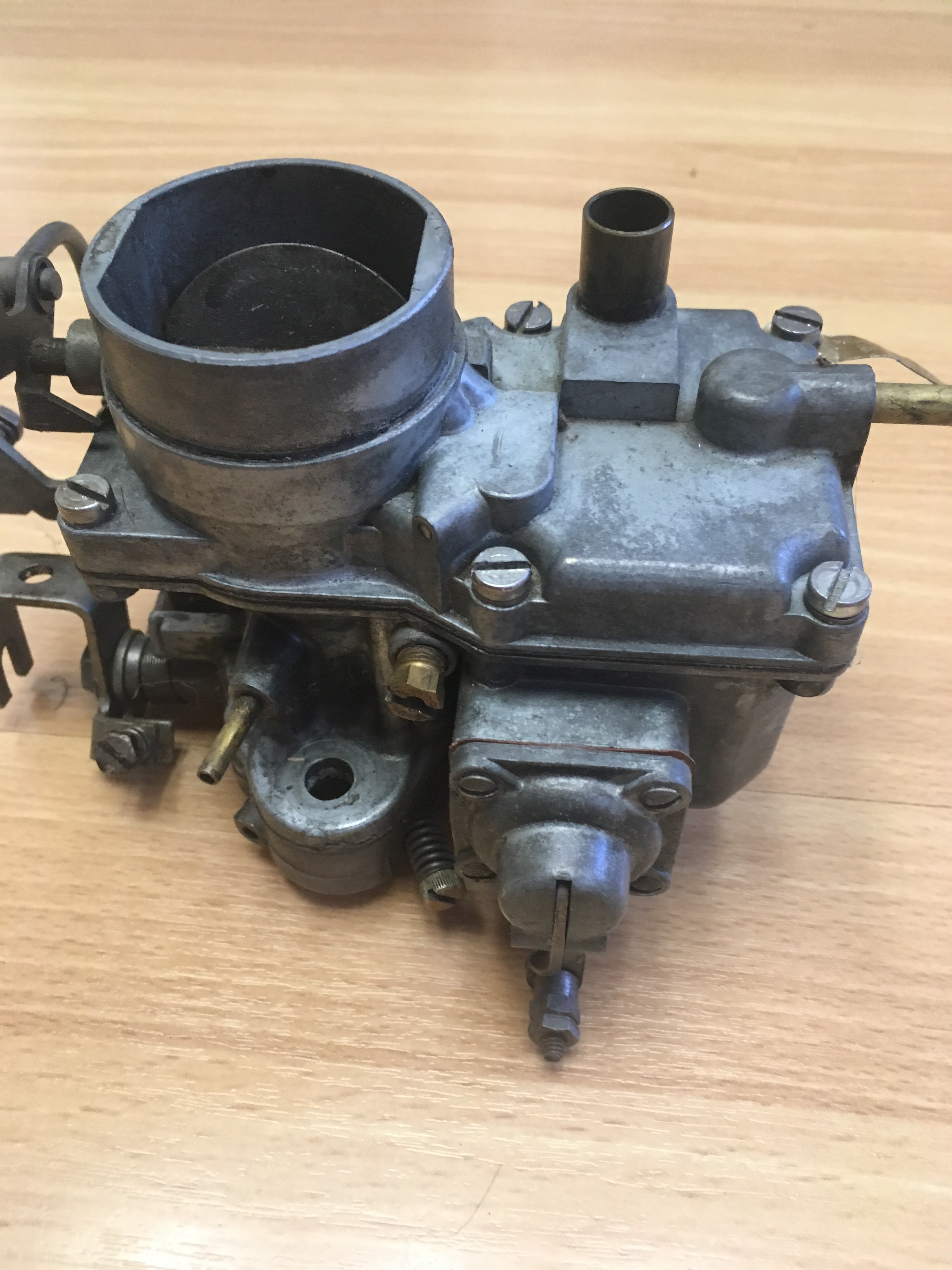


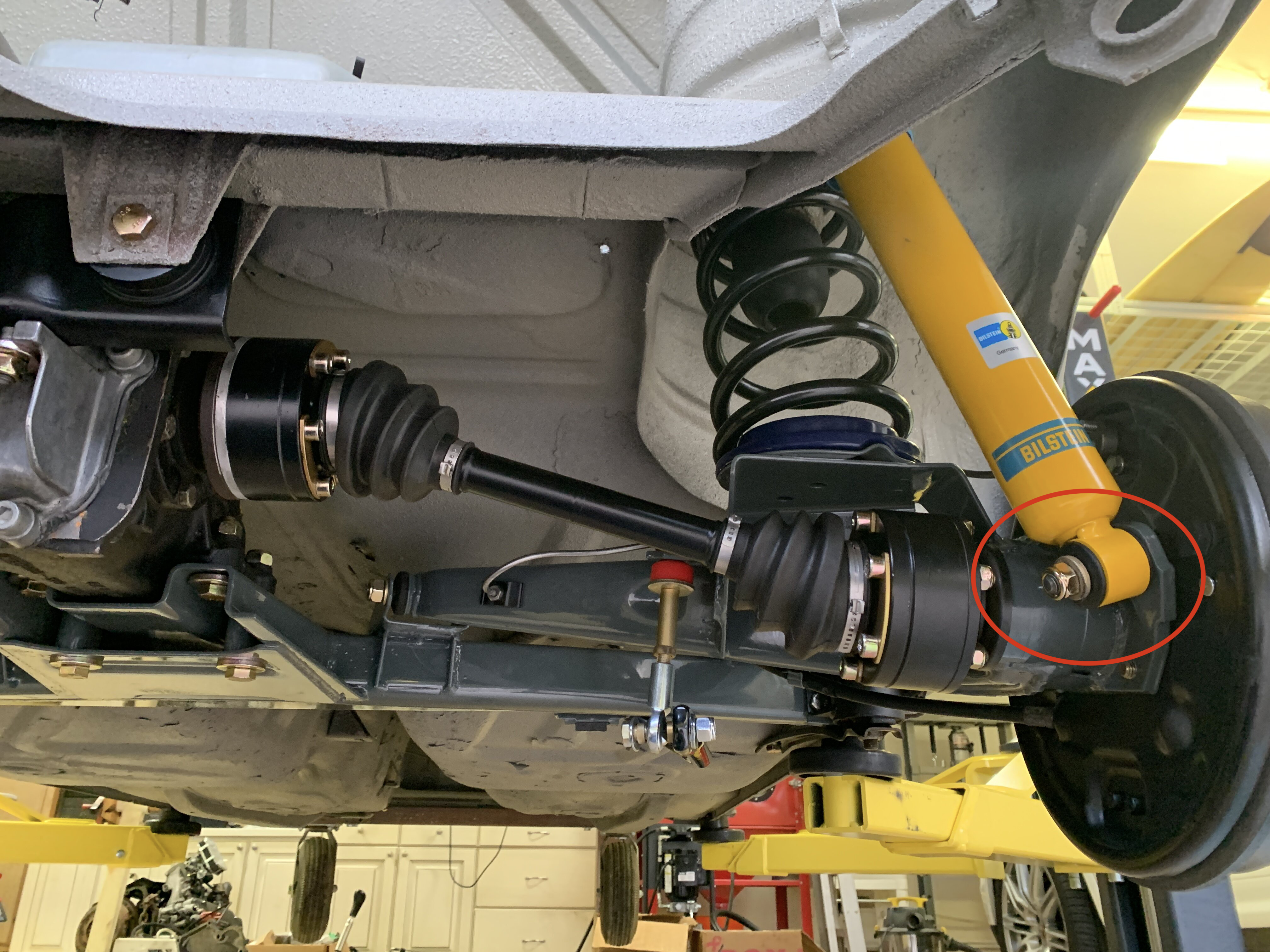


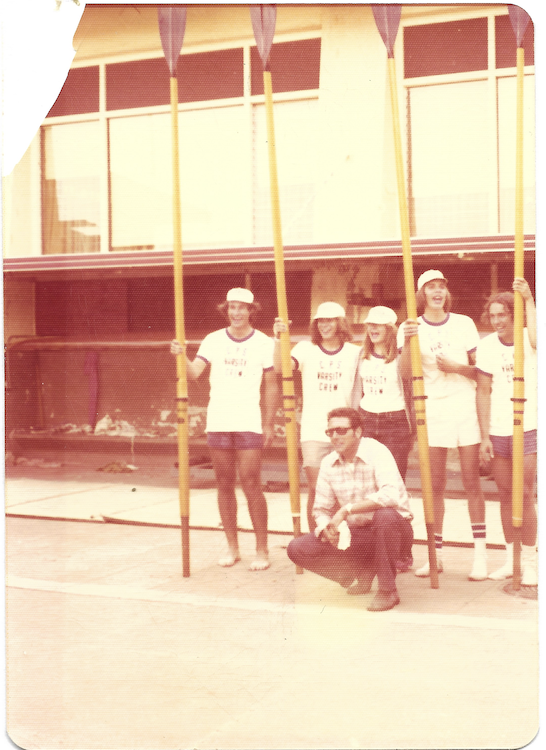 Miles (who later rowed Varsity Heavyweight at Cal), me, Betsy, Humphrey, John and Giancarlo front and center.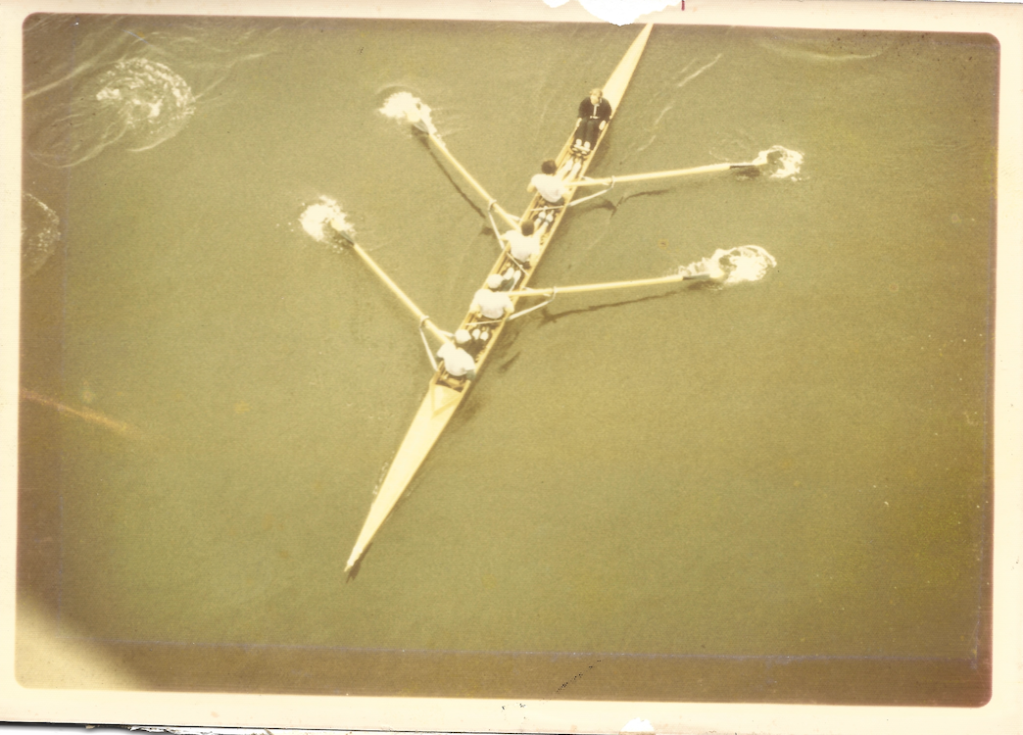
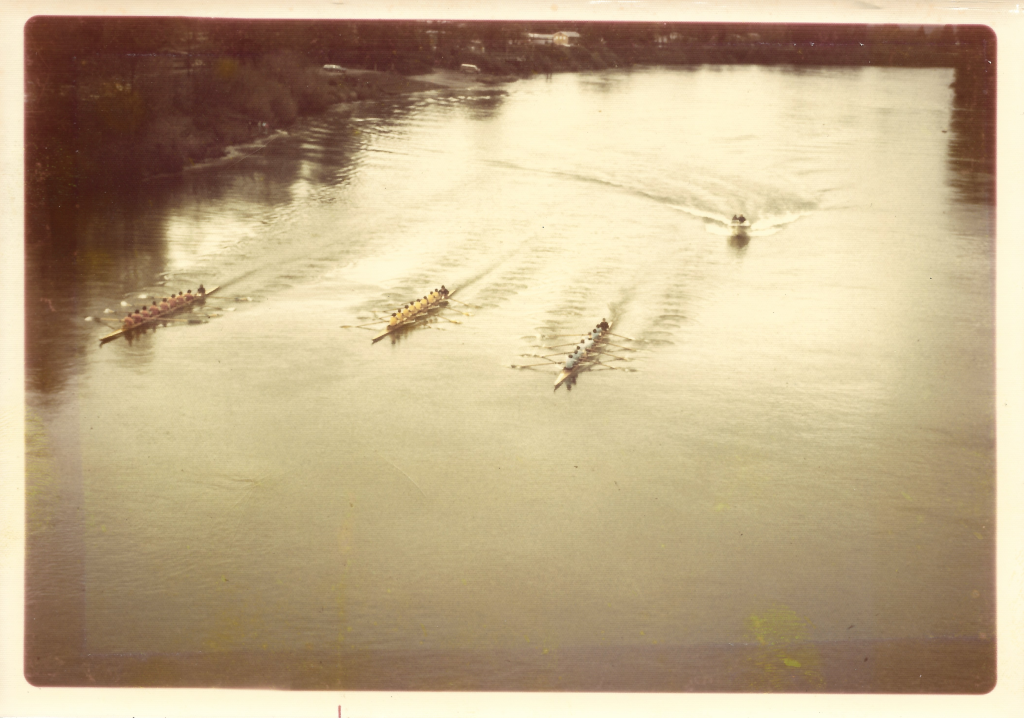
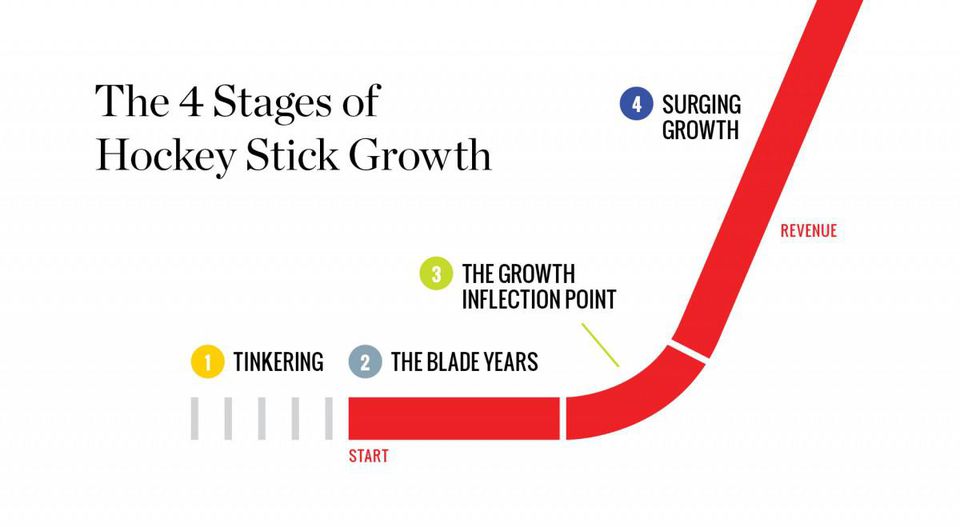
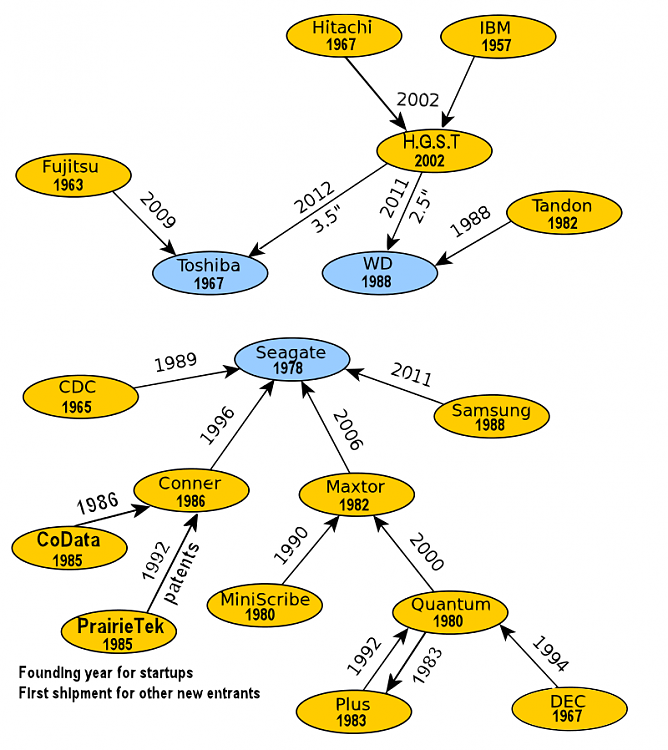
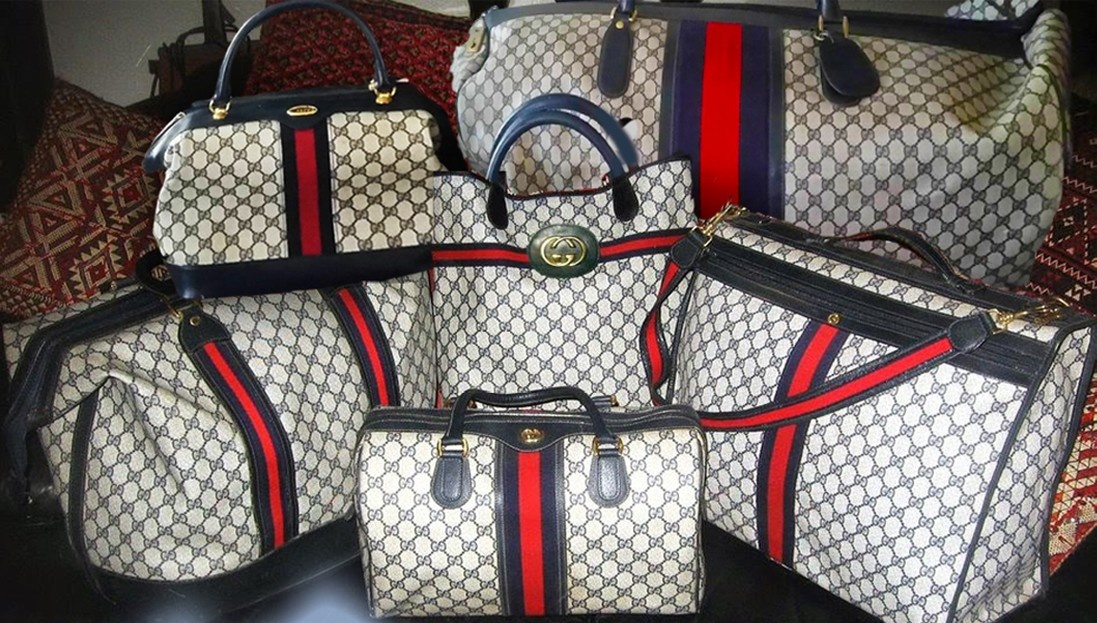
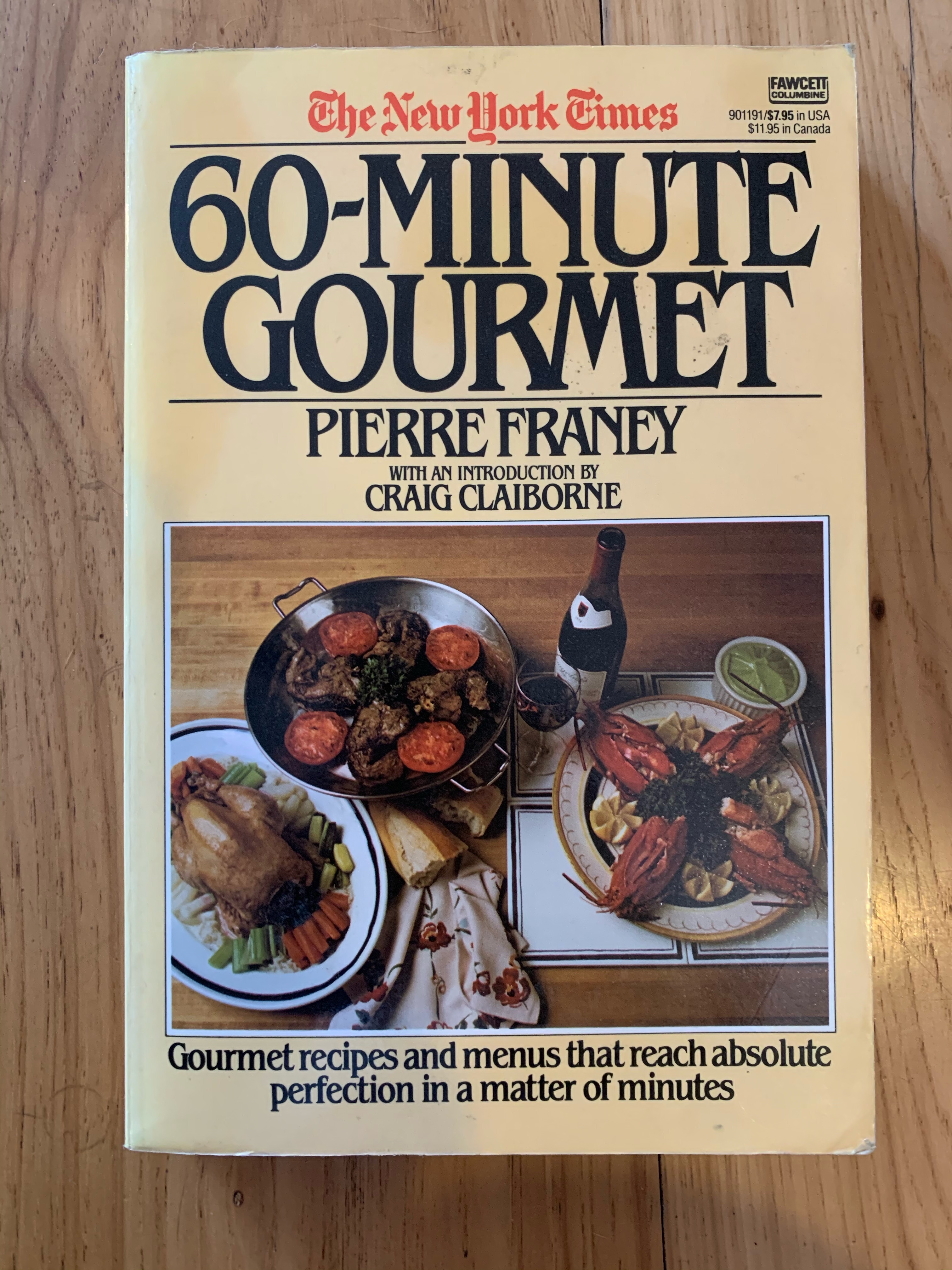
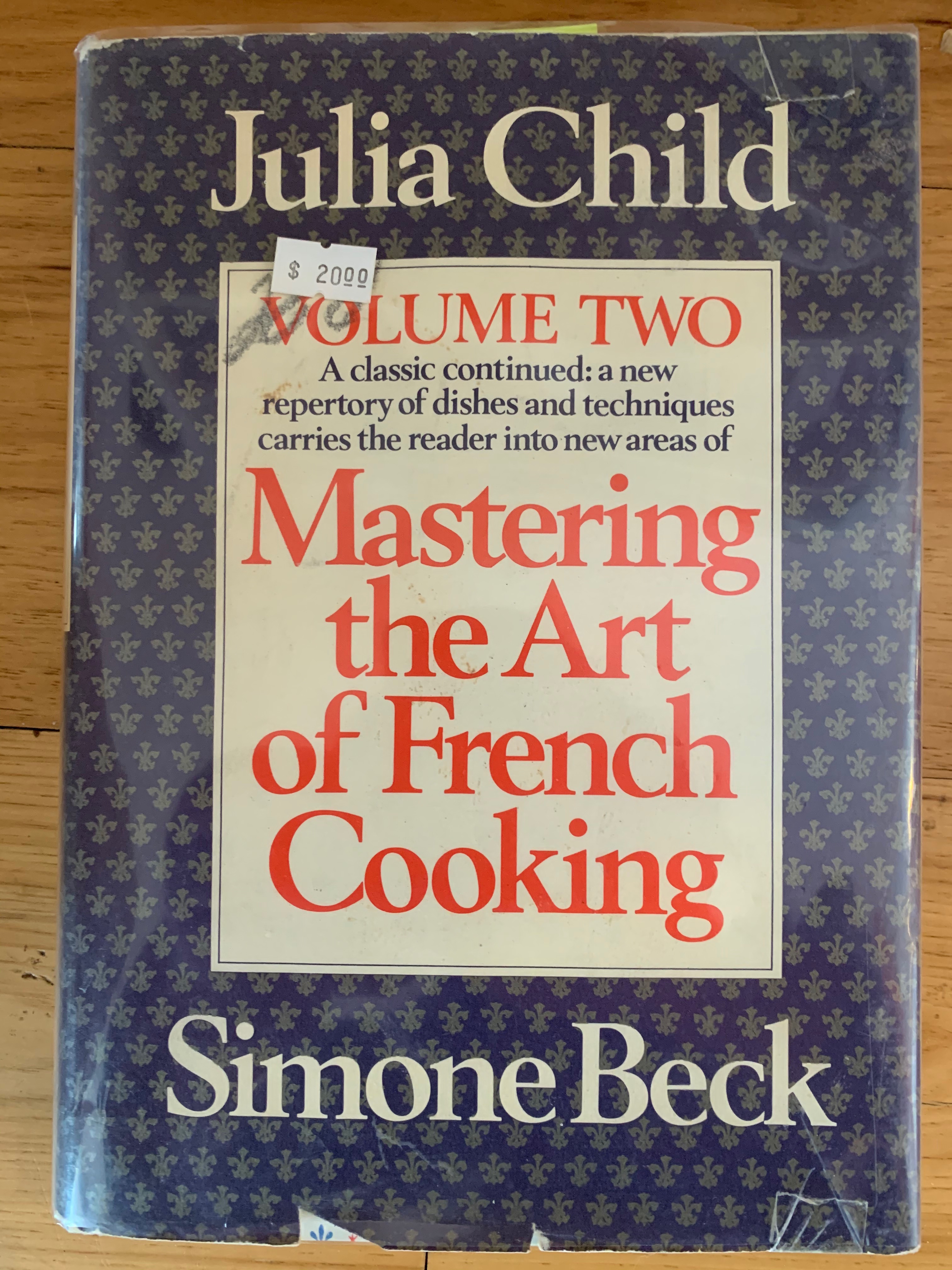


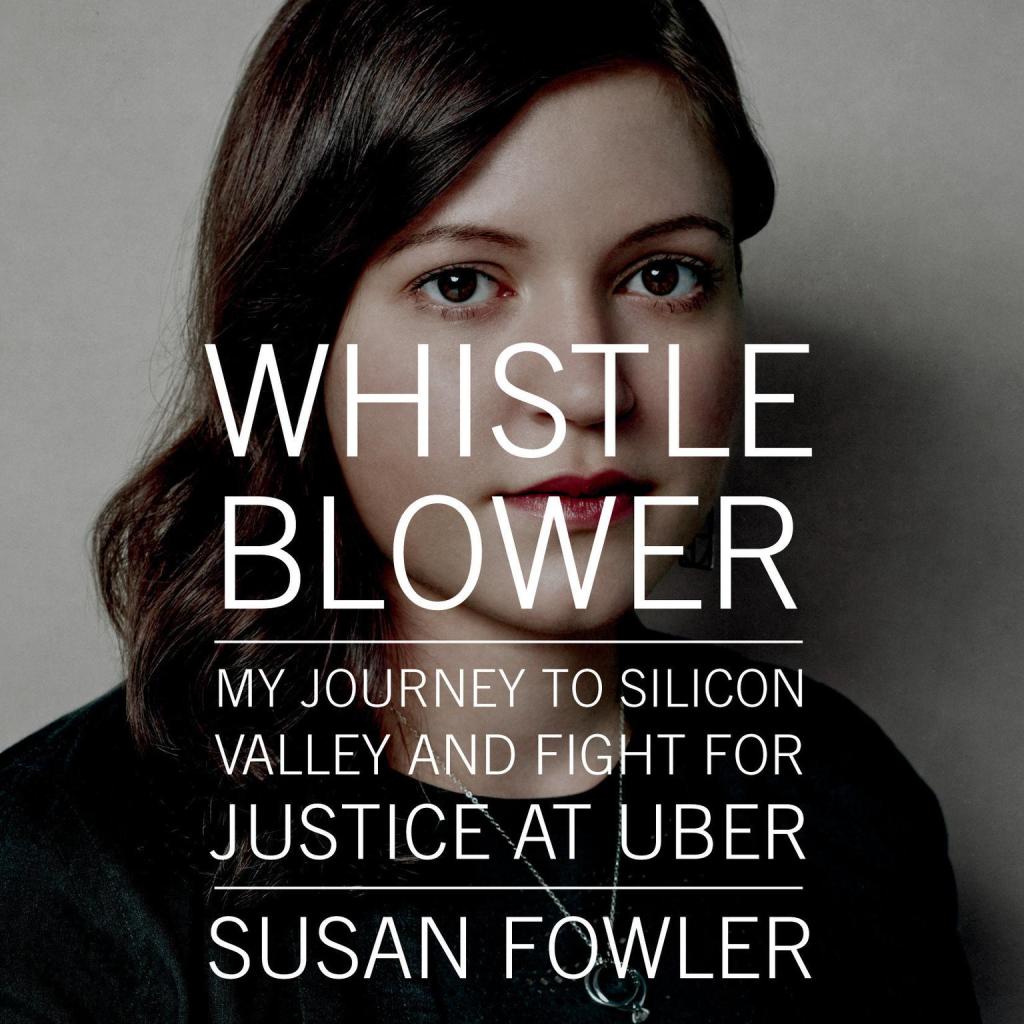
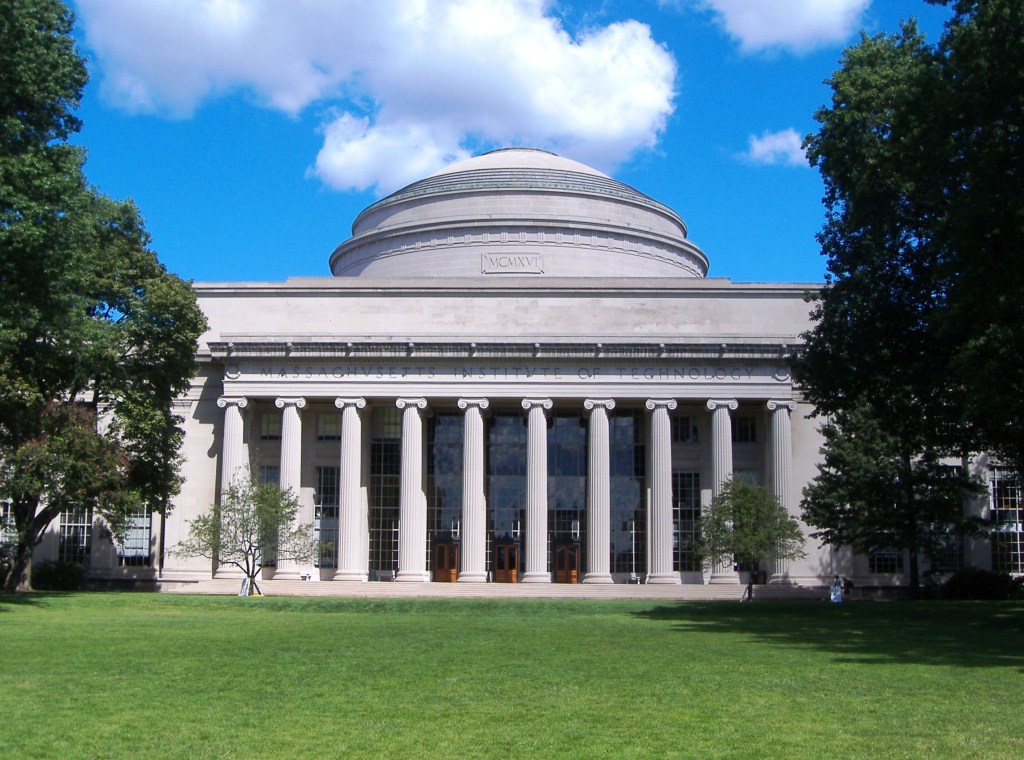




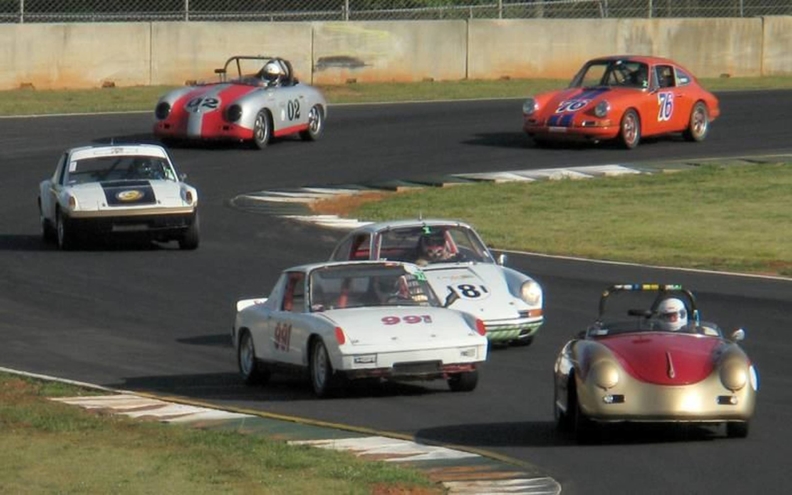


 Open Ambition