Archive for the ‘Intellectual curiosity’ Category

Category creation and the value of not listening to your customers. By Peter Zaballos

February 15, 2018

Part Two: Your vision is strategic, your customers’ vision is tactical

In my earlier post on category creation, I touched on how critically category creation depends on a bold strategic vision owned by the CEO. And that vision gets taken to market through a product that delivers a fundamentally different experience and value to customers from what they have today.

This is hard because your customers live in the world of today. With the product you have right now. That’s what your salespeople sell, and your customer success teams support.

But creating a category is about delivering something so much better than “today.” Ambitious, bold companies learn to live with and take advantage of the ambiguity separating today from the bold future you see possible.

Spot Mini opening door

And given the role the product strategy plays in creating a category, a disproportionate responsibility falls on the product and marketing teams. As a result, there are some subtle but critical factors a CMO needs to take into account.

First, do a 12+ month product plan.
Creating a category involves envisioning a future your customers can’t see. But you can. So fundamentally you are creating a product strategy – a framework that extends from today into the not so distant future.

This means, if you’re using Agile, you look out 12-18 months and understand what are the core capabilities you’ll need to figure out and master. How many of those require foundations to be built now? Work back from those to your field of view 6-12 months from now, and the deliverables will be clearer. More specific. The dev and product teams will have a clearer sense of what is straightforward, understood and what is hard, unknown.

Now look at the 3-6 month timeframe. Here you should have a pretty clear sense of scope and difficulty. The iteration in thinking between 3-6 month windows and 7-12 month windows will likely reveal some dependencies and challenges.

Finally, you can think through what the next six sprints need to look like. Here you’re going to be fairly specific about use cases, personas, and technical scoping.

Every two weeks get everyone together and review where you are on the journey. Both with what has shipped, and what customers are telling you. Customer feedback is essential to checking your assumptions on the 3-6 and 7-12 month release plans. This is super important, and plays into the next two sections below.

If you don’t think Agile works this way you’re wrong. Here’s an awesome podcast from Command Line Heroes laying out Agile and why it’s suited for what I describe above. Agile isn’t about two week fields of view. It’s about rigor and discipline about what you’re doing every two weeks, and how you’re doing it. To have working software validate assumptions, or invalidate them.

Second, don’t listen to your customers
Does this contradict what I just said above? No. Your customers are helping you validate assumptions about your vision. What you don’t want to listen to is their long list of things they wish were better with the product you have right now. Category creation is about bringing something fundamentally different to market.

Customers want what they can see in front of them to be better notdifferent. They see what is sitting right in front of them. That’s what your sales people sold them. That’s what your customer success teams support.

When building a category around a bold vision of what’s possible, the sure sign you are losing your way is to devote most of your time into making your existing product better. And if you listen only to that or let customers drive more than 10-20% of your backlog or dev capacity making the product better, well then you’re not building a category.

Worse, driving your product priorities around “better” means you’re ensuring you will be competitively vulnerable. Then you’re really just building a business around your competitors. Because they too can listen to customers about today. About chasing better, not delivering different. If you focus on better, you’re building an product line that is structurally vulnerable to competitors. You’re solving for now. Not the future.

Third, test your roadmap
With the majority of your roadmap devoted to bringing your category to life, you can now devote your customer engagement to testing your category assumptions. Which also means testing whether or not your vision for what is possible is truly compelling.

Testing your roadmap with customers is a way to make sure your 3-12+ month release plan has integrity. It can confirm or question the validity of your core platform and functionality assumptions. It’s about being inherently curious. Being a voracious learner, and where being an optimist and not a cynic finds a comfortable home.

So that means being super hard core about why your roadmap, working all the way back to the next sprint, is creating and testing the building blocks of the future. The different. You may be shipping a “better” feature that customers care about today, but is there a way to build that “better” improvement in such a way that it also helps inform your progress towards “different?”

At every step along the way. From today’s standup to next year’s category-defining product launch has to be threaded through “am I staying focused on different?”

Go into this not being burdened with what you see today, and instead be driven by an optimism of what’s possible.

Your category vision should invigorate you, your team, and your company every single day. Your category vision should invigorate your customers and entice your prospects. Your product strategy brings all of that to life.

That’s the real role of being a CMO. Ensuring your very talented product and dev teams have struck the right balance around delivering on the strategic vision of different and not getting distracted with today’s noise of better.

Data is our copy editor | Peter Zaballos

February 12, 2018

There has never been a better time to be in marketing, and to be a CMO.

That’s because a CMO has never had more data to drive decisions. And marketing today is all about orchestrating digital experiences – if you aren’t leading with a digital strategy, well, then you simply aren’t leading. And the best part – digital experiences are fundamentally measurable. Or can be. And should be.

I remember the day this was made blindingly obvious. I remember the day like it was yesterday, but it was really close to three years ago.

data-science-illustration-_Feature_1290x688_MS

The woman that ran search marketing on the demand gen team came into my office – which she only did when she had something really important to share – not because she wasn’t welcome, but she had no time for fluff. She loved what she did and what she did was figure out how to optimize what we did in marketing. She started telling me a story.

Before sharing her story, let me tell you a bit more about her. I’ll call her Mollie to protect her identify (I use Mollie because I think that’s simply an awesome name).

Mollie is the kind of person you dream about being on your team. Profoundly curious. A voracious learner. No ego. Lets data and learning drive her decisions and behavior. I have lost count of the number of times she’d pulled me aside to disclose (a) she’d identified a significant source of opportunity or risk, (b) she’d spent a fair amount of time researching how to unlock this opportunity or address the risk, and (c) she’d run enough experiments to confirm the plan she’s proposing will work. All I had to do was ask a few questions (which she had answers to) and say “yes, let’s go.”

So on this day, Mollie mentioned that she had observed that some of our best trafficked awareness and engagement pages had been benefiting from heavy SEO-based revisions. That seems kind of obvious. But here’s where she demonstrated true insight. She’d asked herself “what if every page we developed began first with the SEO strategy – not with a talented writer using Word offline to create what we publish – and then we let performance testing tune (edit) the copy?”

She’d taken the initiative to find out. She’d picked one of our pages written solely by a talented copy-writer (and was destined for future SEO optimization) and created a substitute page, which she herself had written from scratch on the same topic, but started with the terms we wanted to optimize the page for. Then she let the data tell us what to do next.

What she learned was that the SEO-originated copy outperformed the traditional “write first, optimize later” page by a factor of 10x.

What she proposed we then do was to convert all of our copy writing to “SEO-first.” Which meant cycling through our contractor pool to determine who could do this, and replace the ones who couldn’t. It meant changing the process for all the in-house copywriters.

It meant, as Mollie put it, that “data is our copy editor now.”

It was one of the easiest decisions I had to make as a CMO. The curiosity, the experimentation, the data made it obvious.

It fundamentally changed everything we did. Not only did this improve the search performance of the new pages we created, it changed how we curated all of existing content. We no longer had “static” copy on our website, of any kind. White papers are now routinely revised for SEO performance.

Every page is a living document, revised for search performance as algorithms and search term popularity evolves. Every page has data as its copy editor.

Category creating – it’s as easy and hard as it looks. By Peter Zaballos

February 9, 2018

Part One: Bold vision is everything

I’ve been thinking about categories recently. A lot.

I’ve been fortunate to have been in three companies who had that bold vision, who could see that structural opportunity, and who zeroed in on the audience that was affected. At LSI Logic, we saw the opportunity to enable new categories of computing devices – personal computers and mobile devices. At C-Cube Microsystems we envisioned the impact that digital television and film could have on the broadcast and entertainment industries. And at RealNetworks it was as simple as enabling internet-delivered audio and video – developing the breakthroughs making Netflix and Spotify a reality.

Creating a category is easy to say and so hard to do. Or rather, it’s easy to see a company who has created a category and it sure looks obvious in hindsight. But in the early days, even in the middle phase, it’s nothing short of a free-for-all.

Table stakes are having a bold vision for what you think could be dramatically different for the customers you serve. Not better, but different. Not a little different. Fundamentally, earth shatteringly different. And with those words and the belief in them, you then need to have the audacity to live up to them.

The creators of categories dominate the market they create. Because they see a future their competitors don’t. Their competitors chase what the category creator makes visible. They will always be steps behind the category creator.

Creating a new category in the market begins and ends with aligning that bold vision for what’s possible with clarity of the mission of the company and more importantly, for the customers you serve. This is about getting precise about the words. The words matter.

But defining the category is more than words and sentences of a paragraph. And bringing a category vision to life is more than a marketing campaign. It is precisely where the company’s strategy and strategic intent are mobilized across the organization. Category creating is a holistic commitment of the business. It is the CEO’s personal obligation. If the CEO doesn’t personally own this ambition, no amount of over-functioning executives can make up for that. At some point the conversation gets shrill.

BRING THE CATEGORY TO LIFE

With the CEO owning the category vision, they don’t need to  develop the framework that will enable the company to take advantage of and define the category. That can be handled by a member of their team. It has to be someone senior enough in the organization to have visibility and perspective, and also be someone who can work across teams, across execs, and orchestrate engagement. This includes:

  • Identifying the people, processes, and products required to fulfill the category potential.
  • Specifying how you will get from today to that future potential. The solution you have today and what you will build in the future to address  the category problem
  • Identifying the ecosystem that will validate and accelerate the development of the category, and squeeze out your competitors

To bring a category to life depends on this strategic alignment first and foremost with the product strategy. The product needs to deliver this category promise to the users. Their experience validates the category potential, and literally brings it to life in the market. And this product alignment needs to be fully aligned with how these products are taken to market. The words that are literally used to attract prospects, engage them in learning more, and choosing the solution all have to map back to the category vision and definition.

In an age where essentially every sale is driven through some form of digital interaction, the good news is that search performance provides and awesome data-driven laboratory to ensure you get all of this right. You’ll know. The data will scream the results at you.

STEP UP AND LIVE YOUR AMBITION

This is where so many companies get scared. Especially once a company is in the midst of category creation. It’s easy to get frightened, chasing near term revenue and investments in the face of the riskier long term commitments that need to be made. Remember, you’re bringing to market something fundamentally different than what exists today. For the meek, that means there will be some pretty powerful forces pulling you back to…today. Today is familiar. It is safe.

Creating a category is lonely. Especially for the leadership of the company. The CEO and their team are the custodians of this vision, and for a long, long time, they may be the only true believers.That’s why it’s easy to get scared. Why it’s easy to back off. To retreat to the goals and tactics that produced the recent past, and not make the bolder choices to bet on the future.Bringing a category to life is a fully focused go-to-market campaign. Externally and Internally.

That internal part is key. Employees need to have clarity on what that different future will be and how to explain in an appropriate context, whey this journey is important. Customer Success needs to be trained and fluent spokespeople. Sales needs to be trained and fluent spokespeople. Everyone inside the company is on a mission. To fundamentally transform the lives of their customers.

INVIGORATE THE COMPANY

The day-to-day work of creating a category is the essential job of every employee. They need to be trained, to be fluent in, and have internalized the same understanding of the structural opportunity and the role the business has in realizing this opportunity.That’s why RealNetworks had a palpable intensity – every day – that employees were energized and motivated by.

It’s why my friend and RN colleague Dave Cotter remarked “I was probably young enough to believe it, but there really was a sense that we were fundamentally changing the world, and, actually, for a period of time we were.”Bringing a vision to life for customers and prospects goes hand in hand with bringing that vision to life for employees.

This is why the obligation for defining the category rests with the CEO, but how important it is that every employee is enlisted making the vision real to prospects and customers, every day.Category creation is not a board topic, it’s not an exec staff meeting topic.

It’s the CEO’s life mission. It’s internalized by every employee. It’s the lifeblood, the daily obsession, of everyone.

Cabals of Women

September 24, 2017

Sunday mornings are “read the paper” mornings for my wife and me. Today she got to the NY Times before me, and casually remarked “did you know there are cabals of women in Silicon Valley whose goal was to subjugate men?” Well, no dear, I didn’t. I worked there for a long time, never ran across those.

The article quoted an engineer who said “he had realized a few years ago that feminists in Silicon Valley had formed a cabal whose goal was to subjugate men.”

This so wholly encapsulates what happens when power shifts. The rising power scares the incumbent power. The rising power is demonized. Cabals. Subjugating men. Right.

The article was about how gender equality is faring in Silicon Valley, and shined a light on the fairly predictable “backlash” men are feeling as the tech industry, and society, come to terms with the inequities women face forging careers and lives in today’s society.

Jordan Siemens Woman Gazing.jpg

Credit: Jordan Siemens/Getty Images

And I use the term “predictable” because women’s equality is fundamentally about the shift in power. Men following the lead women provide. Men taking direction from women. Nothing scary about that, unless you’ve never seen this before, never experienced it before. Fearing this change is actually to be expected. That doesn’t make the change any less important, or urgent.

No one gives up power easily. And the transition is messy, by definition. Will companies over-correct and set quotas? Sure. Will some leaders interpret this shift as a mandate? Likely. But the direction of change is the important factor to focus on.

That doesn’t diminish the merit of the objective, or the urgency to establish more inclusive, diverse, and equal workforces, and as important, the ability to measure members of the workforce on their contributions.

From a purely capitalist perspective, businesses should be running towards this change. That bastion of capitalism, McKinsey, has even coined a term for this business benefit – The Diversity Dividend. Businesses are performing less well than they would be with more women in leadership roles. Businesses are underperforming, and women (and minorities) are the key to improving business performance.

But I digress. Let’s get back to the men who are afraid of losing their power and role definition as we make this transition.

This quote summed it all up for me, from Jon Parsons, an attorney representing two male Yahoo employees: “No eyebrows are going to rise if a woman heads up fashion,” Mr. Parsons said. “But we’re talking about women staffing positions — things like autos — where it cannot be explained other than manipulation.”

And why might that be? Are men better at cars than women? So, women are better at fashion? How does that explain that the majority of fashion houses are led by men?

What Mr. Parsons is really saying is he’s comfortable with women having leadership positions in fields where he and his clients, presumably, do not have careers or interest. But when it comes to fields where men have been more historically leaders, well yes, men should be leaders. Well, because they always have been.

Welcome to a new world. It’s going to be a messy ride to get there. But we’re headed there. As uncomfortable and scary as that might be. And whatever discomfort that causes males as they make the adjustment, be patient. It’s taken women over 100 years to get to this juncture in the business world. Match their patience.

I am a feminist because of my sons

November 27, 2016

I think I was part of the problem for longer than I realized.

As a man, I simply assumed everyone got treated the same. Got paid the same. Was listened to equally – because I sure was listened to. And they paid me well for what I did and said.

And then I started to feel naïve. At first it was noticing that the women on my teams seemed to be paid less than the men, for the same positions. Then I began to notice women get talked over. I began to see women apologize for voicing an opinion in a meeting. I saw men look right past women’s ideas and contributions. Rarely out of malice. Worse — out of blindness.

womens-equality

I’ve come to realize that women do have a more difficult journey in society today, if they want to have the journey of opportunity and acceptance that men do. Society treats women differently, has different expectations of them.

And generally speaking the ones who notice this are women. Men mostly glide through their careers, like I used to. Thinking everyone is treated the same, with the same access to opportunity.

And I grew up in an era where the term “feminist” was synonymous with “radical” — a fringe viewpoint. A crazy, minority voice. But the more I noticed, the more it became urgently clear to me that “feminist” is not a fringe response to how women are treated in our society, it’s a sane, measured, reasonable response.

The more women outnumber men in education, the more they aspire to secure leadership positions and positions of authority, “Feminist” describes the moment of truth in society as it makes room for them. Learns to respect them, adjusts to following their lead. So yes, I am a feminist.

When I look back on the journey to this realization, it’s punctuated with some specific experiences. Sources of inspiration and heartbreak. But they share a common theme: an injustice.

THAT’S NOT MY IDEA

I was on a volunteer board almost a decade ago. It was for a public/private partnership where the other board members were the city manager, the chancellor of the local university, the head of the local community development authority, and others — staff from the city and university, local business leaders. The tone set by the city manager and chancellor was open and welcoming.

We were focused on building a business incubator facility. At the time we were in the early stages of site selection, budget sizing, and developing fundraising strategies.

There was one meeting I will always remember. We were in the midst of a fairly strident discussion of two different site alternatives and approaching an impasse. One of the city staff members spoke up and proposed a novel, creative third alternative. No one picked up on it. She suggested it again, no one picked up.

I spoke up, and said “Susan (not her real name) has a really good alternative” and I summarized it. Engaged conversation ensued. I was more than taken aback. When more than one person said “Let’s go with Pete’s idea,”  I had to stop the conversation to remind everyone that it was not my idea. It was Susan’s.

I was flabbergasted. Susan and I exchanged glances. Hers one of hurt and appreciation. She was a thoughtful, insightful human. Well versed on the pragmatics of city mechanics and finances. This was the first time I’d personally witnessed what I now know to be a common experience for women.

TRUE-ING UP SALARIES

In every role I have had as a manager, I’ve had to tackle the same problem. The women on my teams were generally not paid the same as the men. And I’ve worked for some of the most progressive and technologically advanced companies in the world. I know there were no overt intentions to pay women less than men for the same jobs, but it happened. Every time.

I coined a term for this: “true-ing up salaries.”

Today I am fortunate to work for a company that shares my values and vigilance. We do examine pay by role and gender to ensure people are paid the same regardless of gender. And I am fortunate to have a role as a senior executive to be able to set a tone and effect policies to ensure we have equal pay for equal roles, that regardless of gender your career path is based on the merits of your contributions. Making this real requires both awareness and action.

SHERYL SANDBERG, ANNE-MARIE SLAUGHTER, AND THE MISTAKES I’VE MADE

When my wife and I met we both had career-track jobs. Me in technology marketing, and she in textbook editing. Within two years of getting married, we had the first of our four children (we would have four children in five years), and without either of us really thinking through the implications, my wife decided to quit her job and become a full-time mother — trading a professional job for a 100+ hour per week job with no pay while also squeezing in 5-10 hours a week of freelance editing.

It’s not so much that we talked much about it, it’s just it was the easier, more obvious choice. I made a lot more money than she could. It just made sense. It was expected. And no one at my office ever asked me if I was coming back to work after the births of any of our children. But that question gets asked of pretty much every pregnant woman. It’s this unspoken societal set of norms that make it easy to not question assumptions. To not think through the alternatives, and the consequences. That’s what we did.

It wasn’t until almost fifteen years later, when during the Great Recession my wife needed to go back to a full-time job, that we realized how much a price that decision had cost her. She was able to resume her editing career — right where she had left it. Meanwhile, I had continued to progress far ahead in mine, further exacerbating the gap between our careers and earning potential. And the fifteen years were spent. She couldn’t get those back.

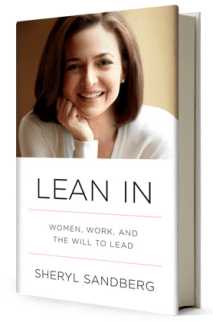
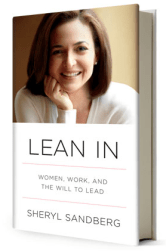
Some years later, reading Lean In by Sheryl Sandberg was a revelation to me. Here was a woman brave enough to share her personal journey through this landscape, to call out just how hard it is for women to travel the same path men do. Social pressure, income inequality.

I read Lean In with equal measures of excitement and shame. How could I have been an enabler to the outcome of my wife’s career path? How could I have not done more to think through the implications, to be a better partner? We both made decisions informed by culture, momentum and inertia. Easy at the time, costly in hindsight.

lean-in

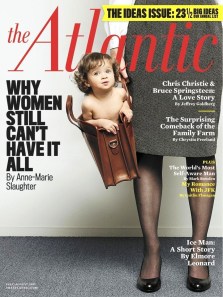
And when Anne-Marie Slaughter penned “Women Can’t Have It All,” it felt like I’d read something written by a soul looking over my shoulder during those decision moments — someone looking over both my wife and my shoulders.

4e9a286e-bc0a-4508-841c-6ea16c0a137d-4624-000006ac3c4b6f52_tmp

As a husband, I let my wife and our family down by not taking a more active role in questioning assumptions, understanding the need to think about consequences of choices — whether intentional or choices made by a lack of an act.

DREAMFORCE EQUALITY SUMMIT

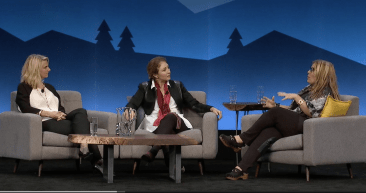
This past October I attended the huge Salesforce.com conference, Dreamforce, and witnessed a session in the Women and Equality Leadership Summit. It was phenomenal Leyla Seka moderated the session where Anne-Marie Slaughter and Sarah Kate Ellis (CEO of GLAAD) spent more than an hour discussing the challenges (and opportunities) women have pursuing leadership roles in business and society. Frank, honest conversation. I found it illuminating, inspiring, and urgent.

df-equality-summit-2016dreamforce-equality-summit

But in a room of about 1,000 people, I was one of maybe 100 men. That was profoundly disappointing and frustrating. Women already know about the challenges they face. While it surely was valuable for them to be there together, where were the men? Men need to be actively engaged in this conversation. A disproportionate number of them in the very positions that can effect change, and they’re not even participating in the conversations.

I HAVE THREE SONS

My wife and I have four children: three sons and a daughter. I am so tired of hearing men called out for gender discrimination verbalizing platitudes of support for women and bringing out the “well of course I’m opposed to discrimination, I have a wife and daughter(s).”

That so, so disgustingly misses the point. You should be vigilant because you have sons. The behavior and values you live inform your sons about what equality looks like and feels like, because inequality affects them, not just your daughter(s) and your wife.

WHY I AM A FEMINIST

I am a feminist because I want to create an environment where women and men get judged equally on their merits, and I want my sons to be fully engaged in creating that world. Where men and women have their ideas heard. Where men and women get paid equally for the same roles.

I am a feminist because I don’t ever want another woman to have her idea appropriated.

I am a feminist because I don’t want to “true-up” salaries for the rest of my professional life. I am a feminist because I want women to have the same opportunities as men.

I am a feminist so that society encourages and makes it possible for men, and women, to be equal care givers. So that either men and women get asked “are you going to stay home after the birth of your child?” or better, the questions stops getting asked, of anyone.

I am a feminist because I want my sons to be active and engaged in creating the environment and “normal” I strive for. A ‘normal” where men and women have their ideas heard.

And I am a feminist because I want my daughter and my sons to see how men can be a part of the change, become leaders, and be blind to gender in the decisions they make and the actions they take, as they live their lives.

Preparation for an upcoming blog post

November 27, 2016

I’ve been working on a post about feminism and the different paths women face in careers and society that men don’t face. Here are a few resources that have both informed my journey and point of view, and have helped me understand the landscape better:

Salesforce.com Dreamforce Equality Summits – Salesforce.com is a company that walks its talk about values and equality. When ___ raised the issue of gender equality in pay to CEO Marc Beniof, his reaction was to dig into the data. And they found they had a problem, and spent $3M “true-ing up” salaries. Their focus on equality at Dreamforce is equal parts inspiration and pragmatic.

Dreamforce 2016

DF Equality Summit 2016.png

Dreamforce 2015

df-2015-equality-summit

Sheryl Sandberg’s Lean In – this book polarized and galvanized the professional world. Perhaps not the first book to highlight the different ways women are treated in society and their careers, but an unapologetic outline of the landscape.

lean-in

Anne Marie Slaughter’s Women Can’t Have It All – the most read article on TheAtlantic.com, ever, this was a counterpunch to Lean In and laid bare how women face different pressure to succeed in their careers while also being the primary caregiver to their children. Pressure men do not face.

4e9a286e-bc0a-4508-841c-6ea16c0a137d-4624-000006ac3c4b6f52_tmp

Bitch Media – This is a thoughtful feminist publishing group that takes complex issues and orchestrates measured discussion and evaluation of the factors creating inequality for women, and the means to address them. The tone is serious and unflinching.

bitch-media

Bitch Media’s Popaganda podcast – And for folks who like to hear their discourse about feminist topics,  Popaganda provides interviews and discussions of a wide range of feminist topics. And the range will present the listener with subjects that may be on the edge or even outside their comfort zone, but that’s good.

popaganda

The high cost of winning

November 17, 2016

It’s been a little over a week since Donald Trump won the US presidential election, and this is playing out as expected. Republicans are the “winners” and Democrats are the “losers.” The obsession with winning at all costs – and the Republicans paid quite a price for this win – is what has polarized our nation, and gridlocked our government.

But with Trump it was different. Let’s not look at his policies – politics is about differing policies, and democracy is supporting the President whether you agree with his/her policies.

This election was different. The words Trump used during his campaign were breathtaking, Shocking. His words revealed him to be a racist. They revealed him to be sexist. They revealed him to mock the disabled. They revealed him to dishonor our servicemen.

And throughout the campaign, the keen observers were reminding us “Trump is not the issue, it’s that so many people support him – that’s the real issue.”

trump-and-his-supporters

True story. As shocking as it is to confront a country led by a racist, sexist bully, it’s even more horrifying to contemplate that people chose that kind of a leader.

So don’t fear Trump. Fear his supporters.

And “his supporters” are people in your community.

The people you shop with, you go to school events with, that you socialize with. For them racism and sexism were not deal breakers. That’s the alarming part of this election.

And there is real fear. In the days after the election our high school age son came home from school sharing with us that his friends and their families are worried about their safety and security. These are naturalized American citizen families of Vietnamese origin, Sri Lankan origin, Mexican origin, middle eastern origin. They are living in fear today.

What they fear is what might happen to them in their community because of the color of their skin, their gender, or their religious beliefs. They certainly don’t fear that Trump will personally discriminate against them, or threaten their safety or well being. It’s that the people they live in this community might. The people who at some point decided that racism and sexism were not deal breakers.

I live in a community with a national reputation for supporting disabled students. The university campus here has sent numerous disabled athletes to the Special Olympics. How should they feel in their community when they see the leader their community members vote for is someone who openly mocks the disabled?

I don’t believe that the people in our communities that supported Trump believe they’re racists or sexists. But the moment of choosing Trump is the moment of truth.

I honestly struggle to imagine an explanation from parent to a daughter explaining why they voted for Trump yet somehow are not in some way endorsing sexism. Would it go like this?: “I’ve decided to vote for Trump, but even though he has repeatedly demeaned women and admitted to groping them, you should feel safe in a society with him as a leader.” Really? How safe can you feel as a woman today, with the Commander-in-Chief setting a tone of blatant sexism?

http://https://www.youtube.com/watch?v=WhsSzIS84ks

When you talk to really effective leaders they will tell you the most significant aspect of leadership is setting the tone of the organization. Setting the tone of what your expectations and standards are. Setting the tone for how work will get done, how decisions will get made, how people will treat each other.

A tone is being set that racism and sexism are ok. That it’s ok to make fun of the disabled. That it’s ok to pass judgment on the men and women in the military because of their race, creed, or national origin.

Put another way, if someone on one of my teams said what Trump has said about women, I would have fired him. And I wouldn’t have deliberated whether or not his ideas and plans about his role in the business had merit. Because none of that would have mattered. I don’t tolerate discrimination on my teams. Zero.

If someone said what he said in a job interview, I wouldn’t has thought “maybe he has better ideas than another candidate?” or “I dislike the other candidates more than this one” – that’s the last I would have seen of them.

Generally speaking, I can’t imagine an ethical corporation that would hire someone who demonstrated the behavior Trump did during the election cycle – regardless of how well they might do the job.

You can like Trump for his policies, but unless you’ve rejected his racist, sexist, mocking of the disabled, dishonoring of our military men and women – then you are enabling racism, you are enabling sexism, you are enabling the diminishing of the disabled and military. Because you can’t say “I support the disabled” and support someone who does this:

trump-disabled

So where does that leave us? I’m not sure. What do we do when we live in communities made up of people who through their vote for Trump seemed to say “Racism, sexism, and other forms of discrimination were not deal breakers.”

It seems to me the obligation for reconciliation lies with them. The responsibility for explaining to the people they see in their community how they could support a candidate like Trump and yet be intolerant of racism, sexism, and other forms of discrimination. They bear the responsibility of safeguarding the members of their community who are of different races, creeds, and colors. And the rest of the community will need to hold them accountable for their actions.

Greg Popovich couldn’t have framed this any better. It’s not about politics. It’s about behavior and our communities.

My User Manual

October 12, 2013

By Peter Zaballos

October 13, 2013

A little over a year ago I started a new job, and a big component of my role was to help the company bring a lot of scale to their marketing, and bring a higher tempo and user focus to the company’s product development. This meant taking three groups of already high performing teams, and leading them into territories unfamiliar to them, while also helping them develop skills and capabilities new to many.

This is the kind of job that comes around in your career rarely. Tremendous, tremendous fun, and the best part is it’s only just beginning. We’re growing like crazy, and are about to enter that phase of the market where we have the right offering at the right time, and are about to see some pretty breathtaking expansion.

transparency

And I found myself explaining how I work, how I manage, and many of my core values as a manager, but also as a person. A lot.

So much of creating the opportunity for the rapid experimentation, fast failure, “iterate to excellence” team performance is based on how you work as a team, not what you work on as a team.

I mentioned this to my wife in a text message while on a train headed to work, and she pointed me to an interview with a CEO about his “user manual” – a one page document that lays out how anyone in the company can easily understand how to work with him. I LOVED it. A combination of approaches, philosophy, and personal values.

By the time I got off the train I had a complete draft of my User Manual. Check it out, I’m on v4.3

By the time I’d plugged in at the office I published it to  everyone on my teams via Chatter, as well as my counterparts on the exec team and a bunch of others I work with frequently.

Folks on my team appreciated the transparency, and it’s made it so much easier to engage with other teams and get to a place of trust and performance that much more quickly.

But the best part was for me. Any time you have to be intentional about something, and write it down, you learn something about yourself.

The Brand Value of “No”

March 5, 2012

One of the most valuable lessons I learned as a venture capitalist, and one that my partners and I took super seriously, was how our personal brands and firm’s brand would be built on how we said “no.”

Being in the VC business is being in the business of saying “no.”  We looked at 300-400 deals a year and funded two or three. Every week I had to say “no” to lots and lots of people. Heck, Marc Andreessen said “no” 1,500 times last year at his firm.

It’s hard to tell someone you’re not going to provide the funding to get their company started when the person you’re speaking with likely has put months or years of their lives into the business they’re pitching to you. The easy way out is to avoid it. And a lot of the time that’s what happens.

A surprising minority of VCs just won’t ever get back to the entrepreneur. Others will send a short, frequently cryptic “your business does not fit with our criteria” response. Neither of these is helpful or particularly honest because VCs pass on deals for very specific reasons that they discuss with their partners in Monday meetings.

So my partners and I decided when we said “no” we would do so in a way that passed along the reasons why – that way the entrepreneur would be able to make some use of our collective thinking. If I felt the business model was flawed, the team was weak, or product strategy too broad – then sharing that information might help the entrepreneur make adjustments. But at least I would be straight-up.

Many of these businesses were fundable – just not by us (that’s where the “did not fit our criteria” was true), so I strove to pass along information that might help the entrepreneur have a better shot at the next firm they pitched.

Not only is it hard to be this direct with someone, it also takes a lot more time than going silent or sending a curt generic note. The nature of leading a startup means being tenacious and persistent. So frequently I’d spend an hour or more while the CEO would try and talk me out of my decision, rebut my argument, and bring more data to the discussion.

This is super relevant regardless of what business you’re in. You will say “no” far more often than you will say “yes”, and becoming comfortable and constructively effective at saying “no” is a way for you to build value in your personal brand as well as your company’s. Whether it’s turning down a proposal from a contractor or letting the many people applying for an open position know they’re not going to make the cut, you can distinguish yourself mightily in how you convey your decision.

You have the opportunity to share your personal values – your brand – to the many people you say “no” to and who knows what opportunity that might create down the road. And in an age where personal brands are becoming increasingly essential to your company and your career, learning how to effectively and constructively say “no” is critical.

So, the next time you’ve got five or ten or fifteen candidates for an open position, invest in your personal brand by telling the folks that didn’t get the job why you chose someone else. You’ll be doing each of them a favor, and building a brand for yourself that you’ll be proud to associated with.

Dealing with equality, invisibility

November 10, 2009

In the past two weeks I’ve had a series of conversations with friends and colleagues about women in the technology workforce, provoked by of all things, water pollution.  The commonality being we’ve moved past the point where the problem is what is visible, and where we’re now facing the challenge of what you can’t see.

Here’s the water pollution angle:  A week or so ago I heard an interview with Charles Duhigg of the NY Times about how the cleanliness of the nation’s water supply is perhaps at greater risk than it’s ever been.  More so than back in the ‘70s, where the pollution was severe: rivers that caught fire, bore multi-colored hues of industrial waste, had detritus floating in them.

Today’s water pollution is microscopic, requiring sophisticated filtering that’s too expensive for water utilities to install.  Charles suggested the most practicable solution is for people to filter their own water, and take personal responsibility to ensure it’s clean and safe. 

So here’s where women in the technology workforce comes in.  Much visible change has happened.  Women are in the workforce, and are increasingly taking leadership positions.  Just not enough.  And what is the right number?  I have no idea, I’d like to think it’s the number that exists when everyone selected for a job is done so on the basis of merit.  The whole point is that it’s the product of an ongoing balancing act. 

I have faith that women’s pay will increase as more and more compensation and performance review processes are made transparent.  But unless they are listened to as equals, then all the process in the world still won’t address this fundamental form of discrimination, affecting the information that feeds performance reviews.  Will women ever get to parity unless their ideas are considered on an equal basis as men’s?

In the technology sector, ideas are what fuels business, so unless women’s ideas are given the same consideration as men’s, they will suffer when it comes time for reviews, and that will affect their compensation.  It won’t address why the women make $0.77 compared to every $1 their male counterparts make, but it won’t hurt.

So, who’s responsible to fix this?   We all are, and we fix it in the moment, calling it out and challenging it in the moment, when it happens. 

I was involved as a member of the board of a public-private entity where we were trying to determine the site of a new facility.  We’d spent weeks and weeks trying to figure out how to secure a really great site, and were running into all sorts of problems.  It was getting frustrating, and I made a suggestion about putting it in a less attractive, but more pragmatic location, which we quickly agreed to do. 

A female staff member pulled me aside after the meeting to thank me, saying she’d been making the same suggestion for weeks, but her superiors hadn’t listened to her.  I can tell you my suggestion was not all that insightful or magnificently made, but I was the male and it was listened to.

Rather than call this out, I spoke to her separately.  I was concerned about creating conflict between her and her superior.  So I let her know I realized how frustrated she must have been to not be listened to, and that at least I saw this.  How will the other male members of this board know how to listen differently if they aren’t shown where they haven’t done so?  I didn’t correct this in the moment, and in doing so I failed the woman who thanked me. 

And this is where the water analogy comes back.  The way to deal with this is to take personal responsibility, and to make what is invisible, visible. 

It is as much women’s responsibility to be louder and less convenient as it is men’s responsibilities to listen more actively.  In either case, everyone has an obligation to call out inequality when they see it.  And it won’t be convenient. 

That’s where I screwed up, and won’t do that again.

A sizable share of the readers of my blog are women.  What’s your experience?